take steps along a path toward discovering the regenerative existential cures to be found in plant dominated environments such as gardens and landscape.
Do you remember the first time you felt, through your sense of sight or your sense of smell, the absolute magic of plants: trees, shrubs, flowers, leaves?
Do you?
Well, my friends, it is a joy that you can find everyday… is it not?
The glory of that experience is the story of Tangier Gardens.
The next two books have CJ in Saudi Arabia, Thailand, Switzerland and Egypt…BUT
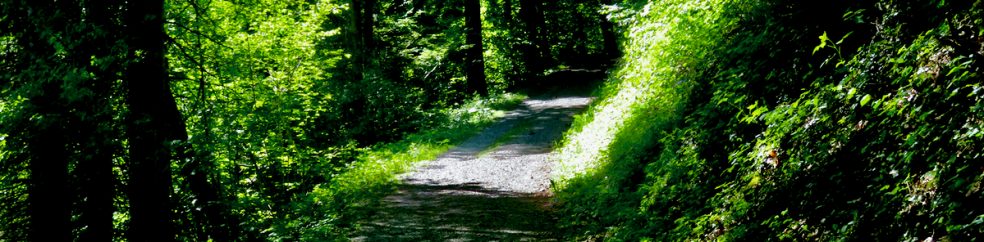
…springtime in these Swiss mountains and lakes has been so enchanting that I have had to go outside and walk and walk and walk. My novels suffer. Yenbo Palms and Crystal Vision will be published before the end of this year.
No, no, no—it’s not the evileye. Couldn’t be. The landscape wouldn’t tolerate such violation, would it?
Living in Tangier, 2000, Christopher Janus, CJ, during his six-month term abroad design study, explored northern Morocco. But his geographic explorations were not the entire story. He was swayed—swayed? How? By what?
Unlike CJ had ever imagined, that geography throbbed with a much larger pulse beat—that of the northwest Africa landscape….
If you are:
-A nature lover or a landscape aficionado;
-Curious about all things green—the environment, plants, gardening, horticulture;
-Intrigued about the northwest Africa multi-cultural, mystical history of people and plants, and their arcane interactions with strangers, then…
NOW, FOLLOW THAT LINK AND PICK UP THE FREE EBOOK, CURIOUS TALES—NOW!
~~~~~~~~~~~~~~~~~~~~~~~~
You wonder… who is this CJ?
CJ is an American, born in the Midwest, raised in New Mexico—a hard worker who found his muse in the landscape.
At university, he grew to embrace music, literature and all the fine arts with humanitarian, environmental and spiritual sensibilities. Did that help him in Morocco?
Studying landscape architecture, CJ was into pedestrian towns and warm sandy beaches. For his last class, that term abroad design study, he’s been in Tangier, a town with sandy beaches on the Med and a historical pedestrian district, the medina. But CJ got more than he bargained for… and it wasn’t a suntan or a relaxing time.
These 43 curious tales were CJ’s final submittal for his term abroad design study. CJ’s curious tales highlight the strangeness of the landscape he encountered in northwest Africa and… what he learned.
…what! If this is true, then what have you been telling us? Lies? Is that so?!
No…it’s just business.
In order to graduate with a degree in Landscape Architecture, CJ had to complete a term-abroad design study. That was the story in Tangier Gardens.
And in order to complete his term-abroad design study, CJ had to submit a final deliverable. Curious Tales is that final deliverable.
In some aspect, Curious Tales is the short form of Tangier Gardens—but with added style.
In Curious Tales CJ shares, in a series of 43 flash fiction stories, his take on the culture and landscape of northwestern Africa. He describes how the unique culture and landscape of that region have impacted his life and approach to landscape architecture design.
I am happy to announce that Curious Tales is now live on Amazon at this link: https://amzn.to/3nO2WEG
And please my friend, share this post with all of your like-minded friends of the landscape.
“Back home, at university, in my original Design Study Statement, I wrote that I would evaluate the use of water features in the Moroccan medina urban public realm, with a view toward deriving a metric of understanding their physical and cultural components.
“I must be frank. I almost failed this self-directed Moroccan design study.
“My time in Tangier took me to some deep places—some I had seen before. Others? Most peculiar…I didn’t know where I was. And others still where I was glad to be.”
But that is CJ’s tale; this prequel is my story.
A weak breeze and a few late wisteria flowers prepared me to be charmed by the view of the Strait of Gibraltar the way I like it–a safe distance, a comfortable distance away from that strangely aggressive magic, that throbbing aura of Joseph Conrad’s Africa. The more I thought about it, the more I could feel that hot African breath prickling the back of my neck.
I had been strolling lazily, inspecting the Gibraltar hotel where I was staying. I walked through the Barbary Bar out onto the shaded Wisteria Terrace. Nobody was sitting out there. Off season. Siesta time of day. Perfect quiet for me, perfect for daydreaming–my way of searching for the orange gardens of the Hesperides.
Curious Tales The Prequel is free to read on Kindle Vella at this link (https://bit.ly/3Hv6p2p)
4.1–The Oval Garden experiences inspired me to address the things that were at the very heart of landscape architecture. In this tale, I talk about the sun and sunlight.
4.2–After my Oval Garden visits, I went over and over my portal experiences, trying to understand logically what happened. I, in this short tale, share my own conclusions.
4.3–I used my own forest experience to construct a short tale in which I talked about forests in the landscape, their life beyond the senses and salubrious exchanges.
4.4–I described what I was missing in Tangier. But I did have a rooftop garden terrace with a view over the Strait of Gibraltar.
Who is CJ and why is he writing these tales?
In June 2000, Christopher Janus, a senior studying landscape architecture at a mid-west America university, finds himself in Tangier on a term abroad design study. The strange culture, the North African landscape and Mediterranean gardens are not what he expected. CJ, as his friends called him, could not wait to be home for Christmas.
To complete his term abroad design study, CJ documented his strange culture, landscape and garden experiences in Morocco in a series of 43 short stories that are being released on Amazon Kindle Vella everyday between now and Christmas Eve. The first 3 are FREE! You can find them here: Tales til Christmas Vella link ASIN: B0BNZDYKKC
La Baie de Tanger–the beach at Tangier with the medina and Kasbah in the background. No wonder CJ thought he had it made for his term-abroad design study.
What could possibly undo the beauty of this landscape, its plants, its gardens, its sun and sandy beaches?
Or is the question, rather, what could enhance this outstandingly beautiful landscape?
CJ had his hands full.
He tried to explain it in a series of short stories about his six months in northern Morocco. He called his very short stories tales.
Tales?
Tales because in Morocco, for the first time in his life CJ couldn’t distinguish between fiction and fact.
CJ’s tales are the reveal.
***
Those very short stories are, for the first time, being released on Vella everyday between now and Christmas Eve.
The first three episodes are FREE and 16 tales have already been posted. Find them here=http://bit.ly/3B9rJXE
ENJOY!!
All 43 tales will be found under one ebook cover titled Curious Tales and via KDPselect will be offered for FREE on the day of launch likely in the first half of 2023. Sign up here to be notified of the launch date to get all 43 tales for free=https://bit.ly/3q5lcaq
***
If you wonder what actually happened during CJ’s six months in Tangier, pick up the eBook, Tangier Gardens–out of the classroom into the real world–via plant portals, FREE on Smashwords here: https://bit.ly/3SIAfma