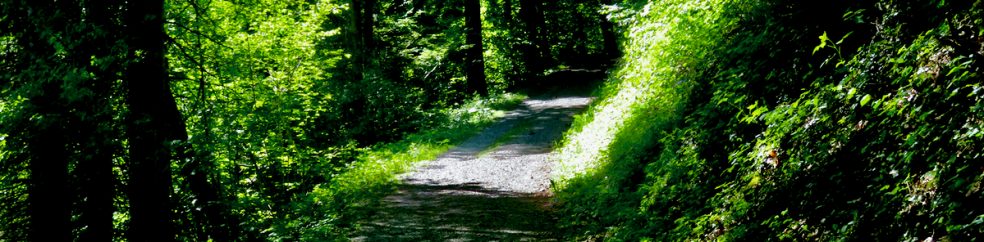
It’s autumn.

Arvin gardens
So what?
Don’t see the beauty?
It’s free, just open your portals and take the ride.

It’s autumn.
Arvin gardens
So what?
Don’t see the beauty?
It’s free, just open your portals and take the ride.
Some clouds belong to the mountains.
Some clouds belong to the sky.

Longing/Belonging

Twilight Time
We all take walks in gardens, in the landscape. We have no choice. Urban landscape, rural landscape, natural landscape. You don’t agree? Consider this, we are either in a shelter or in the landscape. Those are the choices. That is reality. Enough on that.
It started for me in MYST, the 1990s—first-person walking through landscapes. I love that MYST, the Cyan computer game, is first-person and features books—not just any books—books that transport readers into other worlds.
MYST is about a book linking strange worlds to an unusual island. And that island, I came to see as, me. That MYST island and books, both are always linking me to strange other worlds.
Me, a landscape architect—committed to a profession built around making walks through landscapes and gardens a fun and inspirational part of everyone’s life—was mesmerized by MYST, arguably one of the most important video games ever made. Can you see how this is starting to fit together?
When I played MYST, I could never get into the puzzles; but I enjoyed walking in its landscapes—its captivating landscapes. The player begins the game confronted by an old, arcane-looking book. Upon the first page is a strange moving image of an island surrounded by an endless sea. Upon touching the image, the player is transported to the island. From there they must explore and discover why they have been transported there. Does that sound like a good book?
Kind of like reading one of my books—Morocco, Switzerland, Egypt, Turkey, the Gulf States—why has the reader been transported there?
My books, like the game, are more about discovery. MYST, a computer game slowed done to book reading speed where one could freely explore new environments at the readers pace. That made me think that a novel’s landscapes did not have to be a setting, a melting-away background, but rather an environment, a landscape, its own character that was every bit as important as the protagonist.
I visualized a landscape story—not a scientific landscape background but an evolving emotional presence that could lead the reader and the protagonist to portals encouraging to… stop and think.
Like I said, I didn’t like MYST’s puzzles. In my books only the protagonist, CJ, in first-person, encounters contemporary puzzles. You the reader are left simply with the cultural and landscape puzzles mankind only sees in the fading MYST’s of ancient time. And the landscapes in which CJ lives and works, through which he moves, create auras—evolving senses of place, atmosphere, inspiring, foreboding, threatening, questioning. That is what I try to create in my books—they should be fun to move through, to explore.
My professionally edited landscape books—a genre all its own have an ‘indie’ feeling that no publisher wanted to touch—and believe me I tried.
Read my first book, steeped in the northwest Africa landscape, Tangier Gardens, where CJ, a university student on a term-abroad design study, thought he would get a Mediterranean suntan while exploring exotic markets in ancient pedestrian medinas only to find that life, the northwest Africa landscape, had other plans for him.


Tangier Gardens. Curious Tales.
I write travelogue adventure spiced with low fantasy landscape stories, set in exotic geographies, about people, seeking portals on strange journeys, who have unusual, captivating and inspiring interactions with plants, gardens and landscapes… the people most often emerging better.
Low fantasy? Unusual, unexpected things happen to my characters in their daily lives that transport, that transform, that inspire them. I have been influenced by Kenneth Grahame, Algernon Blackwood, Rod Serling, Chris Carter and others.
I’ve worked and lived in all the places I write about. Check them out. Tangier Gardens. Curious Tales.
Keywords: landscapes, gardens, plants, flowers, culture, landscape architecture, design, international, Middle East, North Africa, Europe, USA

I think I’ve got it now… or is it just an ‘old skool’ trap?!
Tangier Gardens—what is it , where did it come from?
I wanted to make this post a pithy one-liner; but I can’t.
Why?
Because it is about my strange, significant life changes since retirement as a Landscape Architect, and since my stroke. So I hope you can get into it because many of you, as I, have the same deep love of landscape or landscape architecture.
It took me five years to write my first novel, Tangier Gardens: out of the classroom into the real world… via plant portals. It has taken another five years for me to figure out how that story actually fits into the nebulous domains of literature and publishing. Following is how I understand it.
Short answer: Tangier Gardens is low fantasy—oh, but what is that?
I hesitate to rely on Wikipedia but after numerous cross-checks, I concluded they have the most concise/appropriate definition:
“Low fantasy is a subgenre of fantasy fiction characterized by magical events intruding upon an otherwise normal, rational world. Unlike high fantasy, which occurs in entirely imaginary worlds (like Middle-earth), low fantasy stories are set on Earth or a recognizable historical landscape where the supernatural is a rare, hidden, or disruptive force.
Key Characteristics of Low Fantasy
The Setting: Set in the primary, real-world (or an Earth-based historical period), meaning the laws of physics and society generally operate as we expect them to.
The Magic: Magic is clandestine, mysterious, or rare. It doesn’t shape the entire world (like dragons flying through the sky as a normal occurrence); instead, it exists in secret or feels uncanny.
The Scope: The narratives are often grounded, focusing on individual survival, gritty realism, or localized conflicts rather than saving the universe or continent-spanning wars.”
In conclusion: While low fantasy stands out as an intriguing, ever-present Tangier Gardens thread, it isn’t the whole picture.
Striving to become a professional landscape architect, CJ, the Tangier Gardens protagonist, is unexpectedly overwhelmed by deep cultural roots–landscape legends. He wasn’t looking for legends—they found him.
Legends—from the Moors, from West Africa, from the Sahara—genies, fairies, charms where real life comes in contact with reality just beyond human understanding.
Paranormal? Metaphysical? Myths? Allegories? Fables? Legends? All are found in the landscape—where an ever-vibrant blend of human life and culture thrives—one step beyond.
So what do we have: love of landscape, gardens, plants, landscape architecture, exotic geography, international adventure, horticulture and botany, and a protagonist’s personal and professional struggles through life.
Tangier Gardens then is travel fiction with low fantasy.
Hell, I ain’t famous but I sure had fun writing about where I’ve lived… exotic foreign places where I’ve worked, places I’ve called home.
Please share this with your friends having the same love of landscape.
Have you been…

Impossible?

https://amzn.to/41v2DNv
It’s me again—the hypocrite
with a black-friday weekend special
you can’t beat this deal
jump on it
watch someone else struggle with life
watch the failures
hope for the successes
a short fast fun read
don’t you just hate these black-friday pushers!!!
Me too, the hypocrite.
Hypocrite—that’s me because even though I hate this seasonal hype… I’m still going to do it myself.
…isn’t being a hypocrite a thing these days?🤪

Hypocrite–you’ll have to live with that.🤪
FLASH SALE
My book, Curious Tales, is a lose-yourself-in-it kind of fiction about an American college student trying to come to grips with his six months in North Africa. The e-book is FREE on Amazon from 26-30November2025.
Here is the link: https://amzn.to/41v2DNv
After decades of American and international landscape architecture and landscape experience, I concluded there was more to landscape architecture than science, horticulture, botany, hardscape and design.
So I started writing landscape stories—a genre nobody has ever heard of. This year I have finished my first series entitled ‘The Landscape Architect’.

The series has six books that trace the career of a landscape architect from university through retirement. In these books, the American protagonist, in his own words, addresses head-on all life’s twists and turns, seeking, as we all do, a healthy balance between personal life and work.
But, that balance can rarely be achieved because the protagonist constantly faces, in the Western European, North African and Middle Eastern places he lives and works, enigmatic challenges from those strange cultures and even stranger landscapes.
🍀!🎉!To celebrate the completion of that series, I offer free to everyone, the e-book version of book three, Yenbo Palms, where the protagonist, suffering from an horrendous family disaster at home in the USA, goes far, far away to work on a huge project in Saudi Arabia. Click on the following safe link to download the FREE Yenbo Palms e-book. https://bit.ly/4qBM3c1

Beautiful, inspiring… until you listen to local people describing it… then it, the landscape, becomes enigmatic—IRL mystifying.

Nothing special here… unless you are invited to look closer—as I was.
Looking deeper and deeper into this cosmos flower… I find the mystery of creation… of birth… of growth… of beauty weaving together an aura that makes a cloth of existential marvel.
Cosmos=Greek=beautiful, harmony, ordered universe=Cosmos bipinnatus.
Is that what I felt?
A Curious Tale, no?