…a Jigsaw Puzzle where none of the pieces quite fit together.

Jigsaw Puzzle

…a Jigsaw Puzzle where none of the pieces quite fit together.
Jigsaw Puzzle
What do you think?

Am I crazy? Clouds growing out of mountains?
It’s autumn.

Arvin gardens
So what?
Don’t see the beauty?
It’s free, just open your portals and take the ride.
Easy to guess autumn is on the way.

The Jungfrau of Lord Byron–Manfred

Snuggle up for the most informative, least intrusive and safest international travel adventure ever—A roman à clef in the Kingdom of Saudi Arabia.
Roman à clef?
A roman à clef (French for “novel with a key”) is a book that tells a real-life story or depicts real people using fictional names, places, and altered events. The “key” is the real-world connection. In my series The Landscape Architect, the key is the geography, the landscape which dominates the story. In addition to the landscape key, I used creative freedom to layer-in Thurberesque character interaction.
Why? …a long story; but here’s the short form.
When I was only an impressionable 17, my father moved us from the US to Belgium. While he was working there, he took us all to London West End on a weekend break. Before he and my mom went to a play, they dropped me off at the Metropole Cinema to watch David Lean’s unforgettable Lawrence of Arabia… and its blazing red Arabian dawn mystical power has ever since driven my life. That was the beginning of how landscape became the key for all my romans à clef in The Landscape Architect series.
What follows is in the news now—a story about Yenbo Saudi Arabia. Yenbo, Yanbu—don’t trouble yourself with spellings. Transliteration between Arabic and Roman alphabets is always a moving target. The third book in my series, The Landscape Architect, is titled Yenbo Palms. Read it and learn some inside stuff about the Western Region of Saudi Arabia, the Yenbo of Lawrence of Arabia, the Yenbo of Christopher Janus (CJ), the Yenbo of the trans-Arabia oil pipeline in this weekend’s news.


Yenbo Palms QR link to Amazon.

Inspirational
Visit exotic landscapes, experience strange roots and auras… then become succoured by inspirational Swiss Berner Oberland landscapes, as in my book, Crystal Vision.

Crystal Vision on Amazon
Why do USA people keep visiting Switzerland?
Ask yourself that question.
Then answer it yourself.
On the land.

On the sea.
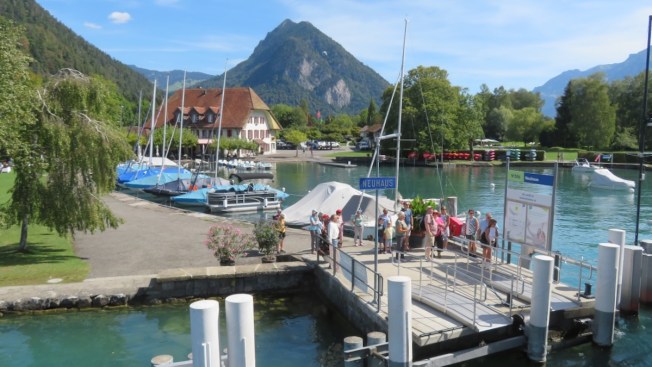
Some clouds belong to the mountains.
Some clouds belong to the sky.

Longing/Belonging

Twilight Time
We all take walks in gardens, in the landscape. We have no choice. Urban landscape, rural landscape, natural landscape. You don’t agree? Consider this, we are either in a shelter or in the landscape. Those are the choices. That is reality. Enough on that.
It started for me in MYST, the 1990s—first-person walking through landscapes. I love that MYST, the Cyan computer game, is first-person and features books—not just any books—books that transport readers into other worlds.
MYST is about a book linking strange worlds to an unusual island. And that island, I came to see as, me. That MYST island and books, both are always linking me to strange other worlds.
Me, a landscape architect—committed to a profession built around making walks through landscapes and gardens a fun and inspirational part of everyone’s life—was mesmerized by MYST, arguably one of the most important video games ever made. Can you see how this is starting to fit together?
When I played MYST, I could never get into the puzzles; but I enjoyed walking in its landscapes—its captivating landscapes. The player begins the game confronted by an old, arcane-looking book. Upon the first page is a strange moving image of an island surrounded by an endless sea. Upon touching the image, the player is transported to the island. From there they must explore and discover why they have been transported there. Does that sound like a good book?
Kind of like reading one of my books—Morocco, Switzerland, Egypt, Turkey, the Gulf States—why has the reader been transported there?
My books, like the game, are more about discovery. MYST, a computer game slowed done to book reading speed where one could freely explore new environments at the readers pace. That made me think that a novel’s landscapes did not have to be a setting, a melting-away background, but rather an environment, a landscape, its own character that was every bit as important as the protagonist.
I visualized a landscape story—not a scientific landscape background but an evolving emotional presence that could lead the reader and the protagonist to portals encouraging to… stop and think.
Like I said, I didn’t like MYST’s puzzles. In my books only the protagonist, CJ, in first-person, encounters contemporary puzzles. You the reader are left simply with the cultural and landscape puzzles mankind only sees in the fading MYST’s of ancient time. And the landscapes in which CJ lives and works, through which he moves, create auras—evolving senses of place, atmosphere, inspiring, foreboding, threatening, questioning. That is what I try to create in my books—they should be fun to move through, to explore.
My professionally edited landscape books—a genre all its own have an ‘indie’ feeling that no publisher wanted to touch—and believe me I tried.
Read my first book, steeped in the northwest Africa landscape, Tangier Gardens, where CJ, a university student on a term-abroad design study, thought he would get a Mediterranean suntan while exploring exotic markets in ancient pedestrian medinas only to find that life, the northwest Africa landscape, had other plans for him.


I think I’ve got it now… or is it just an ‘old skool’ trap?!
Tangier Gardens—what is it , where did it come from?
I wanted to make this post a pithy one-liner; but I can’t.
Why?
Because it is about my strange, significant life changes since retirement as a Landscape Architect, and since my stroke. So I hope you can get into it because many of you, as I, have the same deep love of landscape or landscape architecture.
It took me five years to write my first novel, Tangier Gardens: out of the classroom into the real world… via plant portals. It has taken another five years for me to figure out how that story actually fits into the nebulous domains of literature and publishing. Following is how I understand it.
Short answer: Tangier Gardens is low fantasy—oh, but what is that?
I hesitate to rely on Wikipedia but after numerous cross-checks, I concluded they have the most concise/appropriate definition:
“Low fantasy is a subgenre of fantasy fiction characterized by magical events intruding upon an otherwise normal, rational world. Unlike high fantasy, which occurs in entirely imaginary worlds (like Middle-earth), low fantasy stories are set on Earth or a recognizable historical landscape where the supernatural is a rare, hidden, or disruptive force.
Key Characteristics of Low Fantasy
The Setting: Set in the primary, real-world (or an Earth-based historical period), meaning the laws of physics and society generally operate as we expect them to.
The Magic: Magic is clandestine, mysterious, or rare. It doesn’t shape the entire world (like dragons flying through the sky as a normal occurrence); instead, it exists in secret or feels uncanny.
The Scope: The narratives are often grounded, focusing on individual survival, gritty realism, or localized conflicts rather than saving the universe or continent-spanning wars.”
In conclusion: While low fantasy stands out as an intriguing, ever-present Tangier Gardens thread, it isn’t the whole picture.
Striving to become a professional landscape architect, CJ, the Tangier Gardens protagonist, is unexpectedly overwhelmed by deep cultural roots–landscape legends. He wasn’t looking for legends—they found him.
Legends—from the Moors, from West Africa, from the Sahara—genies, fairies, charms where real life comes in contact with reality just beyond human understanding.
Paranormal? Metaphysical? Myths? Allegories? Fables? Legends? All are found in the landscape—where an ever-vibrant blend of human life and culture thrives—one step beyond.
So what do we have: love of landscape, gardens, plants, landscape architecture, exotic geography, international adventure, horticulture and botany, and a protagonist’s personal and professional struggles through life.
Tangier Gardens then is travel fiction with low fantasy.
Hell, I ain’t famous but I sure had fun writing about where I’ve lived… exotic foreign places where I’ve worked, places I’ve called home.
Please share this with your friends having the same love of landscape.