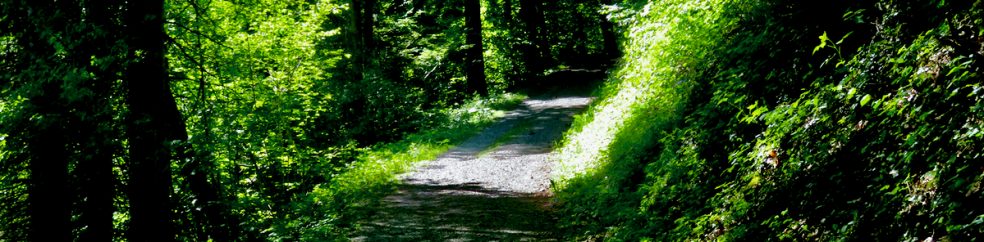
…off the beaten track.
Sometimes it is necessary.

I know a guy, CJ, who almost died looking for that refreshing breath.
Tangier Gardens is his story: https://amzn.to/3HLrtyv

…off the beaten track.
Sometimes it is necessary.
I know a guy, CJ, who almost died looking for that refreshing breath.
Tangier Gardens is his story: https://amzn.to/3HLrtyv

CJ studied fine arts for his first two years at college. In music, literature and painting he found an enigmatic similarity. Many composers, authors and painters were inspired by nature, either the outdoors or human nature. That was clear.
It was, however, the dichotomy of the critics that confused him.
The critics’ perplexing dichotomy pitted human social nature vs the natural world, nature without humans. He wondered why the dichotomy? Were not humans part of the nature in which we all lived? Even though humans were at the top of the food chain we were still part of the chain. How can behavior, intelligence or spirit separate humans from the nature all around us?
And why have so many sought to make that ‘false’ distinction?
CJ’s own battles with this dichotomy got serious when, after deciding to major in landscape architecture, he went to North Africa, for his term abroad design study.
There he met a couple esoteric horticulturists, one Russian and the other British. They had built and were guardians of an arcane garden, the Oval Garden, behind their Hibiscus House. There they tried to educate CJ–solve his enigmatic fine arts, landscape and garden concerns.

LAST DAY OF SALE!!!
Take a walk in Tangier Gardens.
Only 99cents at Smashwords this link: https://bit.ly/3SIAfma
No photographic excellence here.
Clouds, forests, mountains and sky–do clouds dance? Gracefully?

Now, tell me what you see…
I see inspiration. I was inspired to write. Fictional autobiographies by Christopher Janus. Arcane adventures in nature. Read the first, Tangier Gardens. On sale now for a short time.
Take a walk in Tangier Gardens.
Only 99cents at Smashwords this link: https://bit.ly/3SIAfma

What do YOU see here?
Healthy vegetation? Plentiful water? Rich soils? Successful human endeavor? Life? Inspiration?
It’s all there.

The popularity of landscape photographs these days is the result of our lives being so turbulently fast-paced that we humans have an unquenchable existential thirst. We try to satisfy that thirst by absorbing in a one second glance at a landscape photo the peace and inspiration so essential to a fulfilling human existence. But we do not have the time to go out in the real life landscape to actually bathe our souls in it.
***
Do you agree?
If so, maybe you’d like to read the landscape stories I write.
Sign up to my email list: https://bit.ly/3q5lcaq
Read my ebook, Tangier Gardens, it’s free on Smashwords: https://bit.ly/3SIAfma
It is about waking up to a joyful surprise.
Went to sleep hearing the rainfall on the roof. It wasn’t cold, but late autumn coolness everywhere. The falling rain eased me into sleep.
Oh, that first snowfall of the winter…oh, that first snowfall of the year.
There’s nothing quite like it. Waking up to the first–clean, bright, yet not glossy–the best white.

Yesterday like that.
Today…

In life, natural things have always attracted me, so I look for them and write about them
I am a nature lover and a landscape aficionado.
I am curious about all things green—the environment, plants, gardening, horticulture.
And because I am intrigued about the multi-cultural, mystical history of people and plants, I have lived in North Africa, Europe and the Arabian Peninsula.
If you are into these same things, then please visit my Smashwords page or join my email list.

There is light, sunlight, transcendental light… look for it.
It’s always darkest before the dawn–the dawn does come…wait for it, go to it, change will come.
You can see through the dark times.
***
In Tangier Gardens, CJ was submerged in dark times; but with the help of his girl friend, Sachy, he found the light.
If you’re into these kinds of stories, please join my mailing list, more are on the way–stories from Europe, North Africa and the Middle East.
Burnt out by too much hot summer?

Catch some Mediterranean vibes.
Shade, date palms, orange blossoms.
