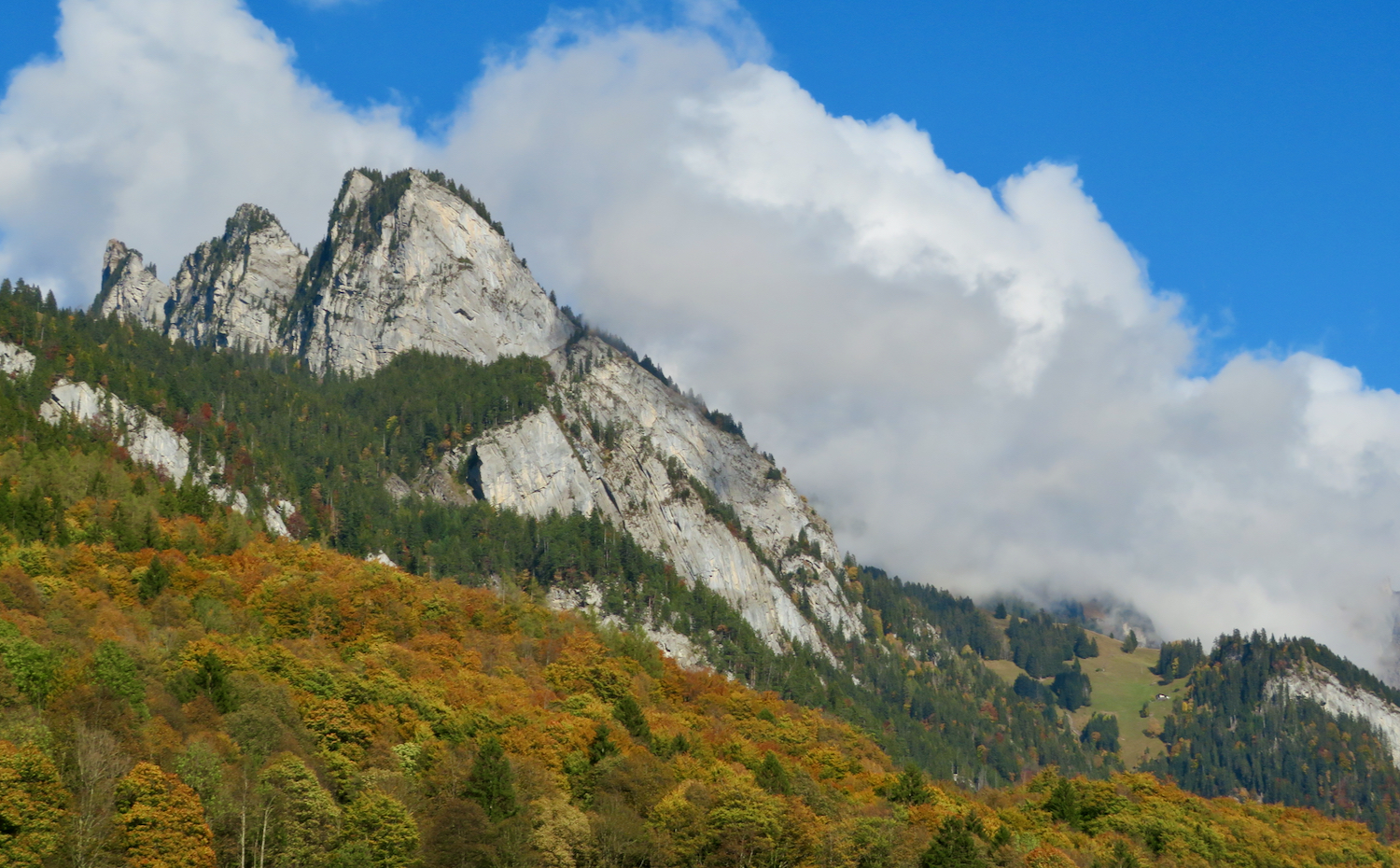
My secret pleasure? I find it when I see clouds forming and escaping from the mountains.
clouds
When the temperature, humidity and barometric pressure are amenable, I can see the mountains breathing.
*
This pleasure from nature, the landscape, the topography, the plants…that is the heart of CJ’s discoveries in my novel, Tangier Gardens, where the student becomes mesmerized by the northwest Africa landscape and Tangier gardens. Interested? Buy the book.
Everybody wants it; but can health, good health be seen?
I’m not talking about humans.
This is about plants. And it is not a discussion about the definition of beauty or the definition of good health.
It is rather about what our eyes can observe. See a beautiful plant. See a beautiful flower. We are accustomed to those.
But something happened to me the other day on a walk. Our local weather has been good: sunshine, warmth and deep gentle rains. Locally, one finds in many home gardens well maintained topsoil–mulched with animal manures and dug in every year.
What does that mean? Healthy plant growth. And even with very common plants, their health shines. It captured my attention recently. My photo shows that. I hope you can see it.
Unusual perceptions of plants and their flowers? That is what CJ experienced for the first time in my book, Tangier Gardens. If you like plants and their flowers you will like CJ’s story.
A mountain treeline certainly is not a line in the common sense. The treeline is defined as the high elevation, climate driven limit of tree growth.
The treeline is the edge of the habitat at which trees are capable of growing. It is found at high elevations. Beyond the tree line, trees cannot tolerate the environmental conditions (usually cold temperatures, extreme snowpack, or associated lack of available moisture).
It is easy to get into the weeds discussing the geographical, botanical and topographical details of a treeline. Just look at the images above for a general idea and the graphic below for a summary.
Mountain treeline explained
But where does the mirror fit in?
A treeline is natural. It tells about interactions between ecotypes. And that makes me think. Is the treeline a vector or raster. Is it a thin line, a narrow path one pixel wide or is it a broad and wide line with varying gradients, blurs and opacities?
I think the latter. And looking in the mirror at treelines, I wonder…are human cultures like environmental ecotypes? Are they definable on their edges by lines? Raster or vector? Is diversity our strength…or our weakness…or is the effort to define cultural differences a non-sequitur?
***
In my book, Tangier Gardens, CJ faced incredible cultural challenges.
The Tangier gardens saved that young man from the relentless, brutal challenges issued by the northwest Africa landscape. It’s an intriguing story about culture, design and humans.
Geographic information science says life is raster and even if you make it vector, the closer you examine the more it becomes raster–so we do our best.
Can you see it on the images? Snow is white, forest is black. Where is the ‘snow line‘?
We don’t have those North American attention grabbing sugar maples or even their cousins around here.
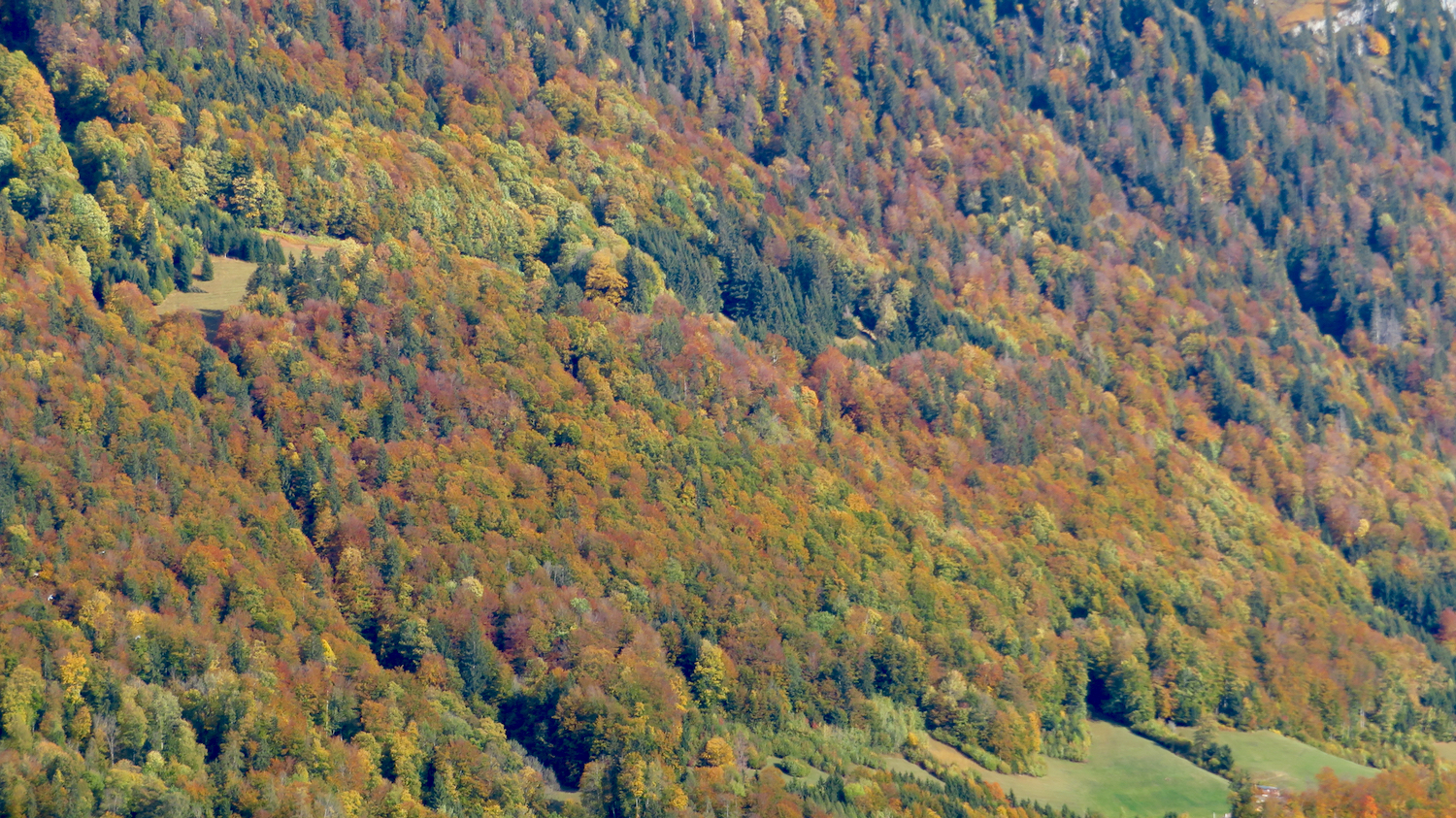
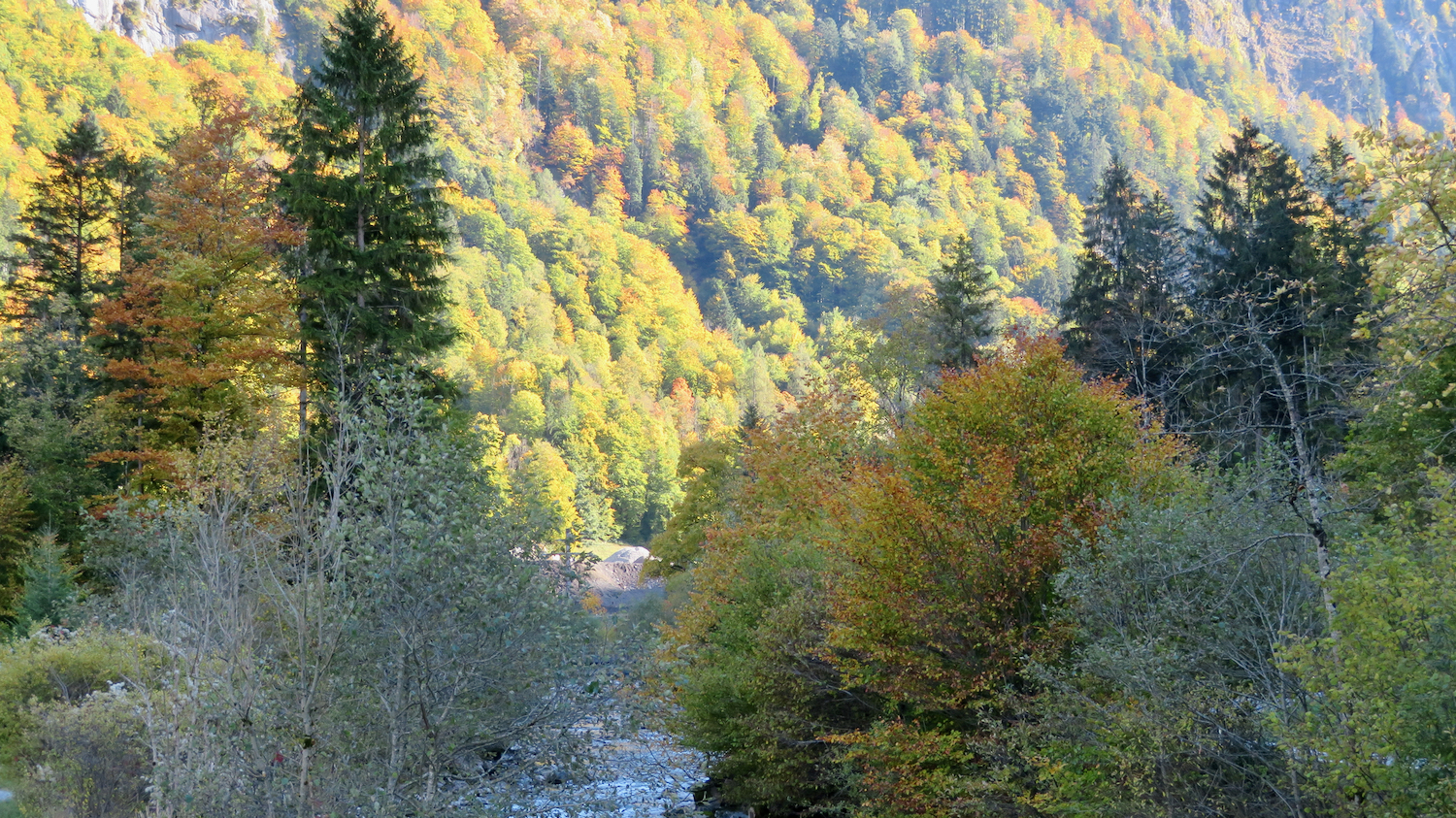
Rising out of the butterscotch sea. From the lower valley pastures to the mid mountain mixed deciduous and evergreen up to the near mountain summit pure coniferous forests. Autumn calls.Some might say how drab! Yellows and browns. C’mon man. But honestly…these yellows and browns in our landscape offer something more…a flavor…a sweetness. A pleasurable sweetness. A lasting enjoyment that comes…from a flavor to a taste…to become softly in our ear…a kind word. Extrasensual.I like it–like a butterscotch candy…the flavor lasts and lasts.
I had to re-post this because it sings in my heart–source of evergreen inspiration.
Edelwyss-Starnen sing the last verse of Mys Alpli. High in the Berner Oberland, an alp is a field, a pasture, a productive piece of mountain land where animals can be grazed. Thus in the background of this you can hear the bells of the sheep, goats and cows. Available at itunes.apple.com/us/artist/jodelg…rnen/id329166348
Mid July in the Berner Oberland Jungfrau Region–it is that time of year when the highest alps receive the animals for the ‘spring’ grasses.
I met a researcher in a Stubbe last week. He was researching linkages between humans and the landscape. He shared with me the following photos of yodelers.
Yodelers in the Jungfrau Region of the Berner Oberland in Switzerland–in the yodel, a human can hear and feel the landscape.
Yodelers demonstrate their respect for the landscape in all aspects of their lives–arts, crafts–and the richness of the detail recalls the richness of their feelings for the landscape. Stewards, custodians of the landscape–that is only the beginning in the Jungfrau Region of the Berner Oberland.
He noted that these yodelers are not hired professionals or foreign workers. They are humans whose families have lived in this landscape for centuries.
He posited that there are rootlets of some strange consistency that transcend the lifetimes of humans. Those rootlets, he said, were channels through which a music travels from the landscape through the voices of the yodelers.
Each verse of a song glorifies a different aspect of the relationship between humans and the landscape. And each chorus…well…the chorus is the landscape.
How can I get free of this stinking political and health fear-stuffed albatross?
Suppose this page is about you…and suppose you are wound up tighter than a drum by the tension of world wide and local politics and health. This page is your wayfinder.
THE PURPOSE OF THE BLOG AND ALL MY WRITING is to assist you the visitor to begin taking steps along a path toward discovering the regenerative existential cures to be freely found in plants, gardens and the landscape.
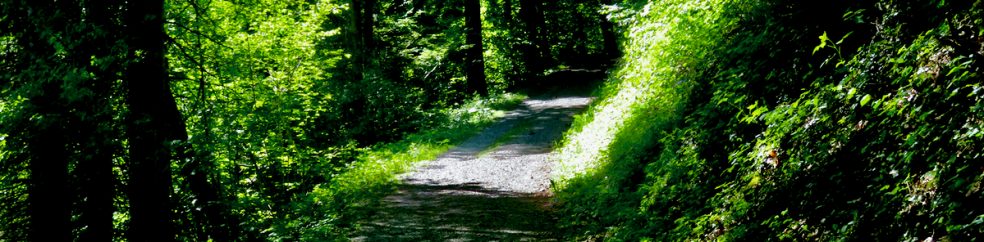
THE FIRST STEP is what could be called ‘nature prescriptions’–calibrated doses of time outside. Take a walk. But does the walk heal? What actually happens? What is on the path that takes you on a journey? Where do landscape journeys take you?
And why even take that path and that journey?
A walk, a journey just for the landscape?–heh, I know what you are thinking–we all know what landscape is, right? Same old, same old, right?
The landscape can be a private cocoon to rest the restless.
On the walk you may weave dreams full of surprise and delight yielding true moments of repose.
It can be a journey to unwind, to regenerate, to reconnect with inner peace, to nest away from the daily hustle and bustle.
What’s missing from this photo? If you want to take that first regenerative walk on a landscape journey, here is what should be missing. Mobile, and any digital intrusion, mechanical noise from the city, from autos, any miscellaneous connectivity kit–that’s right don’t bring modern noise with you. Missing out all th is an essential part of your nature prescription.