

Twilight Time
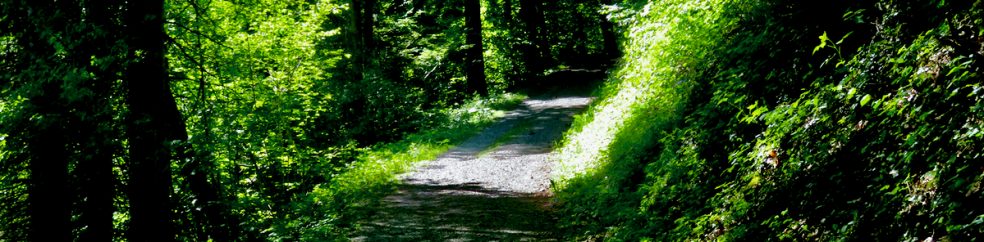
We all take walks in gardens, in the landscape. We have no choice. Urban landscape, rural landscape, natural landscape. You don’t agree? Consider this, we are either in a shelter or in the landscape. Those are the choices. That is reality. Enough on that.
It started for me in MYST, the 1990s—first-person walking through landscapes. I love that MYST, the Cyan computer game, is first-person and features books—not just any books—books that transport readers into other worlds.
MYST is about a book linking strange worlds to an unusual island. And that island, I came to see as, me. That MYST island and books, both are always linking me to strange other worlds.
Me, a landscape architect—committed to a profession built around making walks through landscapes and gardens a fun and inspirational part of everyone’s life—was mesmerized by MYST, arguably one of the most important video games ever made. Can you see how this is starting to fit together?
When I played MYST, I could never get into the puzzles; but I enjoyed walking in its landscapes—its captivating landscapes. The player begins the game confronted by an old, arcane-looking book. Upon the first page is a strange moving image of an island surrounded by an endless sea. Upon touching the image, the player is transported to the island. From there they must explore and discover why they have been transported there. Does that sound like a good book?
Kind of like reading one of my books—Morocco, Switzerland, Egypt, Turkey, the Gulf States—why has the reader been transported there?
My books, like the game, are more about discovery. MYST, a computer game slowed done to book reading speed where one could freely explore new environments at the readers pace. That made me think that a novel’s landscapes did not have to be a setting, a melting-away background, but rather an environment, a landscape, its own character that was every bit as important as the protagonist.
I visualized a landscape story—not a scientific landscape background but an evolving emotional presence that could lead the reader and the protagonist to portals encouraging to… stop and think.
Like I said, I didn’t like MYST’s puzzles. In my books only the protagonist, CJ, in first-person, encounters contemporary puzzles. You the reader are left simply with the cultural and landscape puzzles mankind only sees in the fading MYST’s of ancient time. And the landscapes in which CJ lives and works, through which he moves, create auras—evolving senses of place, atmosphere, inspiring, foreboding, threatening, questioning. That is what I try to create in my books—they should be fun to move through, to explore.
My professionally edited landscape books—a genre all its own have an ‘indie’ feeling that no publisher wanted to touch—and believe me I tried.
Read my first book, steeped in the northwest Africa landscape, Tangier Gardens, where CJ, a university student on a term-abroad design study, thought he would get a Mediterranean suntan while exploring exotic markets in ancient pedestrian medinas only to find that life, the northwest Africa landscape, had other plans for him.
