After decades of American and international landscape architecture and landscape experience, I concluded there was more to landscape architecture than science, horticulture, botany, hardscape and design.
So I started writing landscape stories—a genre nobody has ever heard of. This year I have finished my first series entitled ‘The Landscape Architect’.
The series has six books that trace the career of a landscape architect from university through retirement. In these books, the American protagonist, in his own words, addresses head-on all life’s twists and turns, seeking, as we all do, a healthy balance between personal life and work.
But, that balance can rarely be achieved because the protagonist constantly faces, in the Western European, North African and Middle Eastern places he lives and works, enigmatic challenges from those strange cultures and even stranger landscapes.
🍀!🎉!To celebrate the completion of that series, I offer free to everyone, the e-book version of book three, Yenbo Palms, where the protagonist, suffering from an horrendous family disaster at home in the USA, goes far, far away to work on a huge project in Saudi Arabia. Click on the following safe link to download the FREEYenbo Palms e-book. https://bit.ly/4qBM3c1
Beautiful, inspiring… until you listen to local people describing it… then it, the landscape, becomes enigmatic—IRL mystifying.
Young American coming of age thought he was on a Med holiday; but found himself surrounded by an aggressive landscape haunted by the worst of nightmares–Joseph Conrad’s African and TE Lawrence’s Arabian.
I am embedded in a landscape that has moved from spring into the definites of summer. The basics and the speed of spring growth have finished. For some, the hazy sameness of summer signals the onset of boredom.
Nope, not for me.
Clouds change like the seasons, too slowly to easily see.
Because cloud speed is so slow, people use time lapse to see their beauty, their magical forming and reforming. But–science aside, gaia aside–where do they come from? How do mists turn into clouds? And the mists–here they are…here they aren’t.
I set up this web site to talk about the landscape. Since 2013, most of the posts encourage the reader to interact with the landscape, its gardens and plants.
I wanted to write landscape stories spurred by my own career in landscape architecture to give to students some insights into what they might find in their careers.
Goes back to my university education where I found the most interesting and valuable courses to be a series of 2 week summer courses taught by private sector landscape architects. Why? Real world projects had a resonance that was absent from typical class room assignments.
Situations in post graduation offices taught lessons never addressed at university.
So I wanted to provide that resonance and reality for students still in university. You might ask, why don’t you teach? My response? Teach?!! Different animal–designing and getting a project built–that’s what I can share…and then there is the small item of my stroke four years ago. Isolated now. Don’t do crowds well. Don’t multi-task. Don’t do tit for tat speed–so I write.
Now I am getting to my seasons change title.
I will be gradually modifying this blog as I get closer to the ARC of my debut novel, Tangier Gardens, the first in the series, The Landscape Architect–fictional autobiographical stories that track the strange twists and turns in the life of a landscape architect who is committed to professional career practice. ARC? Advance Review Copy–working on this now.
Over the next six months, I will track the ARC, the pre-publication and the launch. All will happen and be accommodated on this blog.
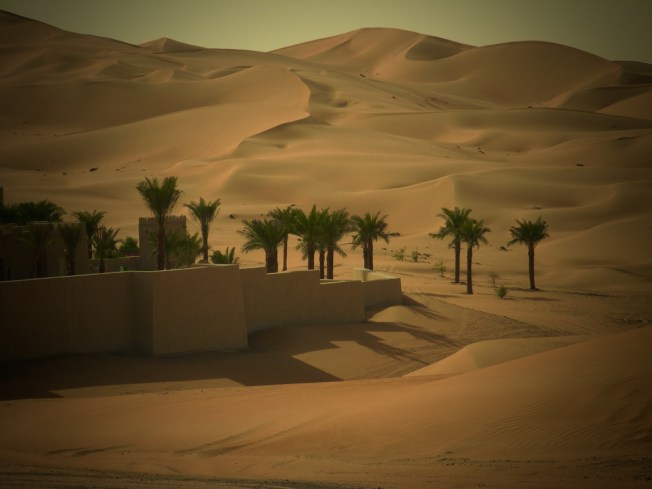
But I also have a presence on YouTube which features the many years I lived and worked in the Arabian Peninsula. It has been years since I dug into the Empty Quarter–that place in SW Asia around which a lot of my professional career as a landscape architect revolved. You wonder about that landscape? Here is a taste. Follow the links embedded in each photo.
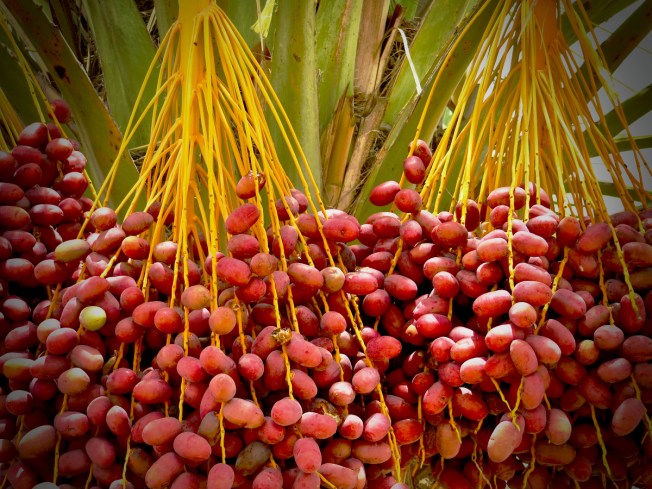
Dates mean water and life. A chance for existence in the Empty ‘of life’ Quarter.In the life cycle of dates, beauty can be found in many seasons in many ways.
A fetish?! …an inanimate object with supposed magical powers or because it is considered to be inhabited by a spirit
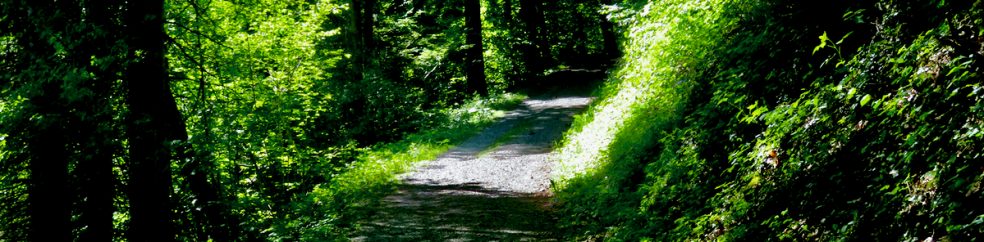
I have been living the last ten years in a landscape rich with water, rich with soil and rich with plants, the Berner Oberland in Switzerland. Each day this Berner Oberland landscape inspires me. I am happy in and enthused by this Swiss Alp landscape.
But yesterday, I came across an old folder of images that stunned me. Stunned? Yes, because as I went through all 50 of them, they gradually inserted themselves. Internally, I could not understand how the barren emptiness of the Rub al Khali, the Empty Quarter, could elicit such a strange, such a pulsating attraction.
It was just memories, right? Yeah, ten years ago, I lived and worked there for more than a year as the installation manager for the landscape at this resort destination–that had its own memories–but the desert–the Empty Quarter has its own magnetism.
I feel it; but I don’t understand it.
Something imposes itself upon the seductive dunes.
The Middle East was always short of mature well formed trees…for various reasons–not native to the Arabian Peninsula and too heavily human populated–all trees cut up or cut down on the Bosphor.
But in Switzerland, the Berner Oberland, Jungfrau Region human population is low and trees are native.
This isn’t a golf course. This is pastureland abutting a forest. Humans have been managing this landscape, with local records dating back over 700 years. And this is the result. I love it. I feel at ease, peaceful when viewing this landscape because of the pleasing shape of mature trees…for me, it is the hard work of stewardship–taking care of forests and pastures. Sweet!
Action? Most of us get no closer to the Arabian Peninsula than King Solomon’s medjool dates, and why not? If you had a choice between your home town and anywhere in the Arabian Peninsula, which would you choose?
My disclaimer is that previously I have lived 20 some *odd* years in and around the Arabian Peninsula. Gimme some of that Dubai, if you will. Go light on the Empty Quarter. And one thimble of Arabic coffee with the dates, please.
In between my infrequent blog entries, which always focus on humans and landscape, I am writing adventure novels, not surprisingly on humans and landscape.
As you can see from the menu bar above, I have been working on four novels over the past six years.
In preparation for updating them on my blog this fall, I have had some fun doing themed graphic design, one composite image for each of the four novels.
Themed graphics?
Yes—unique to each novel—humans interacting with the exotic geography and inspirational landscape around them, with the lightest sprinkling of ethnobotany.
I have interpreted each of the four novels below and I hope you find them enjoyable.
If so, recommend them to your like-minded friends, please.
This is the least developed adventure to date. The story revolves around a coffee house in Vienna–a place where for centuries East and West have and continue to struggle…over espresso…the text offering a brief respite.
The landscape background is the Arabian Peninsula’s Empty Quarter where surface sand patterns take us to Julian eternities and the sun takes away our sight. The botanical panel is the date palm, Phoenix canariensis providing food, utensils, environmental and architectural shelter. The human craft panel is carved stone–essential discipline. The text is the gold ring.
The Moroccan landscape background threatens with an irritating red born of never-truly-healed and always festering cultural conflict wounds–North African, Arabian, Sub-Saharan African and European–in equal measures macerating humans over millennia. The botanical panel is the fruit and foliage of the fig, Ficus carica–rare relief. The human craft shows patterns from North African Berber wool carpets–practical essentials. The text is the shelter humans take from the native and endemic forms of the plant, Cannabis sativa. The dreams are real life.
The dark green and blue landscape background is the edge of our dreams always implanted by the highland mountains, forests, lakes, rivers and streams of the Swiss Alps. The botanical panel is the gentian, Gentiana acaulis, whose blue beauty, paired with our rare good fortune, beckons human transformation. The human craft panel patterns are the lace of internal order. The text is the promise of clarity–or is it simply the hope of clarity?