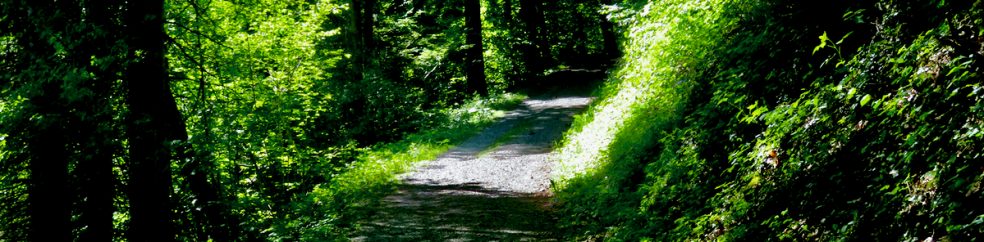
Landrace Clouds

What are landrace clouds? I made it up. Combination of words to describe the reality of cloud appearance in my neighborhood.

My neighborhood. According to the Swiss National Meteorological office, my Swiss neighborhood is the Northern Alps, the north facing slopes of the northernmost range of Alps in Switzerland. Using more common tourist and environmentally friendly vocabulary, my neighborhood is in the Jungfrau Region of the Berner Oberland around Interlaken. I live in the north-facing drainage basin of the famous Eiger, Monch and Jungfrau mountain triumvirate.

Now all that aside, over my years of walking this neighborhood, I have noticed that barely observable, minimal fluctuations in temperature, humidity, pressure and wind create quite dramatic formation and dissolution of very low level clouds. Please do not confuse them with fog. For a patient viewer, a dance reveals itself. And where there is dance, there is music. Not in astronomical time, but in real time. See it. Feel it. Hear it. 

Unmistakeable to a person on foot.

So for me, landrace clouds are very specific, locally generated occurrences. That is my starting point. That is real. Then the fiction begins. I call it fiction because of the reality that what we call ‘fixed’ or ‘settled’ science is not really fixed or settled or permanent. I like working and writing on the edge of the fixed because every edge is fuzzy and invites exploration, as do these landrace cloud phenomena.

I ask myself, what really happens at the point where a cloud begins its formation in touch with the earth? My response is a bit alchemical, a bit old school. I theorise that point as the interaction of earth, air, water…kind of special already, no? But what about ether? What happens at the moment of generation and the final moment of dissolution?

So, I go hunting in my neighborhood for generation points of landrace clouds. Following are eleven images from recent forays.

01_IMG_0517

1. Here is a generic shot of clouds in my neighborhood. Note the lake(water), the mountains(earth) and the sky(air). Note the cloud varieties.  Anybody sense the presence of ethereal?

02_IMG_0530

2. Here is a closer view showing certain cloud interactions with the earth.

04_IMG_0532

3. In this partially zoomed view, note the implied dynamics of the landrace cloud edges.

03_IMG_0536

4. In this zoomed view it is clear to see the scale of the landscape and the recently generated landrace cloud.

05_IMG_0520

5. And now the landrace cloud hunt begins–first person–on the ground–in your face.

06_IMG_0521

6. I learned the landrace cloud dynamics first hand. They always move. Their edges always change. The harder I looked, the further away they were.

07_IMG_0523

7. On another day, I learned that if I just stood still long enough, the landrace clouds came to me. But on this day no such luck.

08_IMG_0528

8. Without the opportunity to be at the point of cloud generation, I had so satisfy the walk by appreciating such details as here.

09_IMG_0519

9. Spring wild flowers in Alp pastures never cease to amaze.

010_IMG_0526

10. But as I was looking for the landrace cloud points of generation, I saw this hut at the edge of the forest.

011_IMG_0527

11. And at the peak of the roof,  protecting this hut, was…

All of the above represent a ‘typical’ walk in my neighborhood. And that is why fiction is just too close to fact. 

And then Christmas was over.

img_9069

Purify by fire…elimination of last year’s evil. The municipality arranged for a community Christmas tree burning. Presto! Last year’s evil is up in smoke.

Every country and culture has a different interpretation of Christmas, trees and Santa Claus.

After the passing of the Christmas and the New Year, our local neighborhood, in the Jungfrau Region of the Swiss Alps, furnished these three image examples.

img_8816

Saint Nikolas prepares to distribute bread, while his companion, Schmutzli prepares to sweep away what remains of this past year’s evil.

img_8840

And if some evil escapes Schmutzli, numerous helpers are prepared to scare it away.

Have no fear, Happy New Year!

Recharge

Fog.

This is not fog.

What is fresh air?

Settled science? Humans and animals–oxygen in, carbon dioxide out. Plants–carbon dioxide in, oxygen out.

In cold weather those are small clouds coming out of our nose when we breathe. 

Does the earth breathe out clouds like we do?

Mountains, creeks and lakes come together with temperatures just above freezing and a light drizzle from cloudy skies…that makes my day.

The play of air, water and earth can be visualized best by observing the visual interplay of low level clouds–they appear and disappear with a rhythm and frequency that reminds me of my own breaths.

On a calm day, the very low clouds come and go as if breaths from a huge giant–the earth itself.

What is fresh air if it is not air that has been filtered by plants …or filtered by earth…or filtered by both.

Think about it the next time you inhale a deep breath of fresh air.

Think about it the next time you exhale a cloud.

FogCaption01

Clouds often arise from creek beds like this.

Version 2

Cloud arising from adjacent forest.

Version 2

Clouds arising from the earth via forests and creeks have a scaled up size and time span not dissimilar in proportion to small individual human exhales. They appear…

Version 2

 …and they disappear.

FogCaption05

For me, the action is at the cloud edges.

FogCaption06

Inhale…exhale…repeat…more slowly…more deeply…recharge is real.

FogCaption07

The unpredictable dynamic mystifies.

Rising

I am obsessed with the magic of clouds rising from nothing.

But what is that nothing?

Imagine what you might see, feel, hear underneath that dark, 100 foot tall forest canopy as a cloud just begins to emerge from around you?

IMG_0056 (1)

This mixed evergreen and deciduous forest has a canopy that is more than a ten story building, 30 meters (100feet) tall. On the forest floor, it is dark. And the floor is not level. Beneath the canopy is  a steeply varied topography–very exciting–filled with surprising variety of flora and fauna–if you are quiet and patient.


Is that flower wild?

Or is it just having fun?

I had the joy of observing these two patches of flowers yesterday.

One is wild in the woods and the other is wild in the garden. Judging books by their covers, are we?

But someone has written that having a book in your pocket is like having a garden in your pocket. Then where do the wild flowers belong?

But anywhere you find them, they are a discovery pleasure of spring.

IMG_0761 (1)

Wild in the garden

IMG_0753

Wild in the woods

May in Paris

IMG_0164

…but for me it was April in Paris until…

I had to write this. Stroke is more common than many realize. This may be helpful to those for the first time encountering stroke affected close friends and loved ones.

Just about a year ago, I was visiting a nice park in Paris. It was a quiet Sunday morning. Roses and irises were in full bloom. The day was clear. The sun, getting higher, was bright and warm. There were plenty of public benches in the park. All the benches were empty. I looked for one in the shade with a good view over the gardens.

I sat down and immediately felt very tired. I then felt strangely obliged to do what my normal public bench common sense would never allow—lean over and lie down, using my day pack as a pillow. Everything went dark. After some unknown amount of time, I heard voices; but I couldn’t see anything. Still all dark—like my eyes were shut tight. I couldn’t open them. That’s how I remember it. But I could hear more and more voices, the voices of families that I figured had started visiting the park.

Well, that was the stroke onset. Making a long uncomfortable story shorter, I was then three weeks in an emergency ward of a Parisian hospital. Lots of strange stuff. But here is the quick and dirty. Couldn’t write, couldn’t walk, couldn’t swallow. Feeding tube in the nose, IV in hand, arm, everywhere, you know the ‘find the vein’ hospital drill. Nurses firmly reminding me ‘ne bougez pas’, like I had a choice. Fortunately, I knew French. That brain skill remained. I could not move in the bed. No toilet. No cleaning. The nurses did everything for me. I had time and capacity to think.

‘Was this my peak recovery? Is this the rest of my life? Will I ever leave the hospital? Will I ever see my family? Will I ever walk again? Will I ever be able to feed myself? Will I ever be able to clean myself?’ That was some depressing sh*t.

So one year later, after  a lot of will power, therapy and the gracious help of family, therapists, nurses and staff, I am walking in my own neighborhood with my family. I am writing, eating and cleaning myself in what I tell myself is d*mn near a normal life. Every case is different, I am told; but this post is about hope and continually taking one small step at a time.

On a walk this week, I took these three Spring photos to depict the hope and glory and reality of the human condition.

IMG_0728

Will every flower that’s happy please stretch out your petals toward the sun?

IMG_0737

Who can’t feel the beautiful richness of the season?

IMG_0745

The remnants of this tree, as it becomes repurposed by other natural elements, remind me of the struggles of every human, having gone through three score and ten. No one gets out without giving up some, without losing some. But in the end, even in the remnants can be found a certain beauty.


On Ecology–Kenneth Grahame

International Authors' DayBetween 14-18 July 2015, on each day, I will be making a post in celebration of International Authors’ Day, featuring review of works by Kenneth Grahame, J.L. Borges and Algernon Blackwood, authors whose works have been formative inspirations for me.

These posts will be made as part of a Blog Hop as can be seen and visited through the links at the bottom of each post.

Today is 15July2015.
~~~~~~~~~~~~~~~~~~
On Ecology–Kenneth Grahame
~~~~~~~~~~~~~~~~~~

Kenneth Grahame, 1859-1932, access to his works at Gutenberg.

…now where is that portal…

Especially in Kenneth Grahame’s Wind in the Willows, E.H. Shepard’s illustrations imparted the author’s deep feelings for the forest landscape and its inhabitants.

While many think of Wind in the Willows (1908) as Toad of Toad Hall–it really is an intimate picture of the landscape around which Kenneth Grahame grew up and always loved.

I think of him as the first Ecologist. Most of us, when we think of ecology, think first of the Odum brothers in the 1950s. But for me, it was the observational powers of Kenneth Grahame–how the flora and fauna intimately interacted on diurnal and seasonal bases in his own local patch.

The following two minute sound clip documents Kenneth Grahame’s heartfelt understanding of the landscape.
[soundcloud url=”https://api.soundcloud.com/tracks/214642771″ params=”auto_play=false&hide_related=false&show_comments=true&show_user=true&show_reposts=false&visual=true” width=”100%” height=”100″ iframe=”true” /]

I respect, I highly value his powers of observation. Unfortunately his efforts have been blacklisted, by some cultural revisionists, as anthropomorphic, but…that bit of censoring is only as transient in time as a slight breeze on a hot, still, summer day.

Kenneth Grahame’s work will return–be it Wind in the Willows, 1908 or Pagan Papers, 1893 when he was already asking ‘Are we irrevocably cut off from the natural world, or might there still be a way back to it?’

He knew of the power in the landscape.
~~~~~~~~~~~~~~~~~~


~~~~~~~~~~~~~~~~~~
Plants: how do they inspire you?
Please answer that question because on the last day of this International Authors’ Day Blog Hop, I will randomly select a winner to receive The 23 Club, Beta 6, a free giveaway for your reading enjoyment.