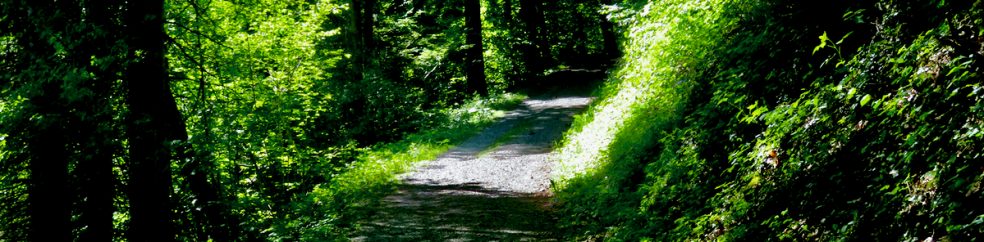
Northern range of the Swiss Alps.
Last third of April–lots of spring flowers–violets going by–winter clothes put away–boom–spring snow showers.
The spring wild flowers in homeowners’ lawns speak Easter to my memories.
Between the mountain air and those flowering plants is an aura that feeds and frees my creative synapses. Absolutely amazing.
Some people might call it a ‘natural high’ but no. Whatever it is, it inspires, it energizes and encourages the freedom that is the base of creative thoughts, words and deeds.

The airs are important. On the highest and northernmost massif of the Swiss Alps, the airs flow down, mingled with the airs of the plants and earth, otherwise undisturbed, from 4,000 meters (above sea level) over the surfaces of broad lakes into and among the gardens of the villages at 600 meters.

This diverse mix of wild flowers bloom in that narrow window, just after the grasses green with life but before the grasses spurt with growth.
How can the beauty of spring become black and white and retain its ethereality?
The same but different. We have just to live it.

From a distance, it’s hard to see, but the waves carry it in the air…from that huge bowl of a valley…the pastures.

Closer, pastures rolling up and rolling across the slopes, the fields. My eyes and nose battle to receive their outpouring.

Invisible micro-whisps rising, swirling…they enter my nose, uninvited, confusing my sense of beauty with olfactory complexities; but then my receptors are overtaxed and I can receive no more—so I look and my eyes gradually suffer the same fate.
Why are these pleasures time-stamped? Am I being protected from following some forbidden sensual path into the home of these glorious plants?
Just a question. Because I will visit these pastures again tomorrow and for a brief moment share their waves of ecstasies.
The history of the Interlaken landscape before river channel control was one of a swamp as the Lutschine and Lombach emptied huge Alpine catchments into this flat land adjacent to the Aare River.
Up the valleys Grindelwald, Lauterbrunnen, Saxeten and Lombach where swampiness was not a problem, people have for centuries managed arable land to support their families. Particularly in the Grindelwald area, there are seven centuries of written records documenting how they managed the landscape.
So this region has a tradition of agriculture, crop and animal management in family scale over the lands from Alpine heights to valley floors. The following series of images show how the Interlaken neighborhoods now follow that same tradition of small land management and family food gardens today.

In the allotments, beauty comes from sweat equity. Healthy allotment gardens are the best of public realm commitments–people and plants in harmony–heart warming it is.

Villages are densely built in the foreground. Pastures in the middle ground with barns for storing hay.

I just can’t stop including more images of healthy veg gardens next to homes–such a fulfilling feeling.

Petal Mirror–is the universe in that petal mirror? Are those stars?
And if those are stars…what is the reverse mirror?
Mirrors, look into yourself? Or, mirrors, look into the clear night sky?
I was looking into this African violet petal mirror and saw everything about the night sky that I could not understand…and…everything about myself I could not understand.
Before I collapsed from dizziness, I asked how can a plant do this?
…and today, I’m happy just to enjoy this flower’s beauty. Really, I’m just fine. 🙂

Primula urbanica
Fighting to re-occupy what we humans call the city, the 21st century warriors, Primula urbanica, escaped captivity and weaponised to take the battle to the humans.
Don’t we all dream of this day of reckoning?!

They’re over the barriers already!!!
Look!!! They’re pouring over the barriers!! Victory is in our grasp!

Primula vulgaris
The Prim Roses back at camp, some resting from combat, others in training. For decades they suffered indignities. Humans spat foul names at them. Vulgaris they endured.
Until they discovered the portal to the inner secrets of the Berner Oberland. Behind the scenes, evolution became weaponised and the revolution began. In the dark corners of unknown-to-tourists stubbes can be heard the whispered discussions of Prim Roses: Flowers at every doorstep–no more easy access to cars!

Primula vera
Just past the edge of town, along the creeks, the Wildings keep a cool eye on operations, the battles in town. Sweet revenge. Order returns.
Between 14-18 July 2015, on each day, I will be making a post in celebration of International Authors’ Day, featuring review of works by Kenneth Grahame, J.L. Borges and Algernon Blackwood, authors whose works have been formative inspirations for me.
These posts will be made as part of a Blog Hop as can be seen and visited through the links at the bottom of each post.
Today is 17July2015.
~~~~~~~~~~~~~~~~~~
Existential Garden Visits: J.L. Borges
~~~~~~~~~~~~~~~~~~
1899-1986 Jorge Luis Borges, some of his works can be found here.
Library of Babel. This image I share with all of you who are convinced that the written word is at the center of our lives and a library houses the efforts of all people who share your convictions…J.L. Borges called it Library of Babel.
Here is a two minute sound clip featuring Borges’ description from The Library of Babel:
[soundcloud url=”https://api.soundcloud.com/tracks/214955959″ params=”auto_play=false&hide_related=false&show_comments=true&show_user=true&show_reposts=false&visual=true” width=”100%” height=”100″ iframe=”true” /]
If you tried to call his work based upon themes, you would have to include dreams, labyrinths, libraries, mirrors–the stuff that provides portals to the madness of existence–the madness of questions some of us ask, some of us become obsessed and others by the grace of God, never even think of–so, some of you would be better off not reading any further.
In one of his stories, most often quoted, analyzed, The Garden of Forking Paths, he takes the reader on a garden journey wherein movement through a labyrinth is required, however the labyrinth folds back in on itself through networks of time, none of which are the same, all of which are equal, an infinite regression.
The concept itself is incredible and the masterful skill of writing that creates the experience–beyond words. Fantastic writing, fantastic imagination–and you must ask yourself upon reading that–you must ask yourself where did I come from, where am I going and what is this thing we call life.
But it all starts with books because books, like gardens…always take you…somewhere unexpected…if you let them. Libraries, gardens, landscapes…what more could you want? And Borges is supreme at enticing his reader into the garden, as in this 4 minute sound clip:
[soundcloud url=”https://api.soundcloud.com/tracks/214956284″ params=”auto_play=false&hide_related=false&show_comments=true&show_user=true&show_reposts=false&visual=true” width=”100%” height=”100″ iframe=”true” /]
But there is too often a dreary end to existential inquiry–I prefer the garden, or a walk out into the landscape–places where discovery captivates, enthuses.
~~~~~~~~~~~~~~~~~~
~~~~~~~~~~~~~~~~~~

In the garden just like every book, just like every piece of music–in the garden are discoveries to be made–portals with thresholds waiting to be crossed–it is up to you.
Plants: how do they inspire you?
Please answer that question in the comments below, because on the last day of this International Authors’ Day Blog Hop, I will randomly select a winner to receive The 23 Club, Beta 6, a free giveaway for your reading enjoyment.
The 23 Club (Beta 06)
Table of Contents
~~~~~~~~~~~~~~~~~~
[youtube https://www.youtube.com/watch?v=7Pq-S557XQU&w=560&h=315]
And then, what?
Easy, humans will have more time in the landscape, in gardens, with plants, exploring, asking… Older, forgotten knowledge, accessible via plants, will be re-learned.
And what have we forgotten? Perhaps you will share with me?
PS And maybe we will have enough time to have measured discussion on…say… the difference between a republic and democracy, or…how to balance individual freedom with personal, local and national security? 😉 But what does that have to do with plants?