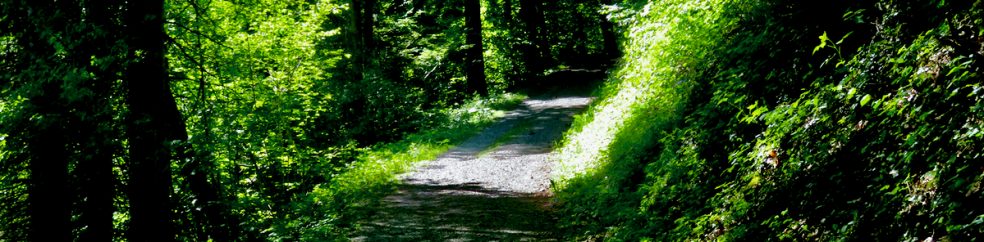
Your path is in front of you.

A new path on your journey. Discover what happens to you at the edges of the clouds.
Take the path. Explore. Discover. It’s free. 🙂

Your path is in front of you.
A new path on your journey. Discover what happens to you at the edges of the clouds.
Take the path. Explore. Discover. It’s free. 🙂
In between my infrequent blog entries, which always focus on humans and landscape, I am writing adventure novels, not surprisingly on humans and landscape.
As you can see from the menu bar above, I have been working on four novels over the past six years.
In preparation for updating them on my blog this fall, I have had some fun doing themed graphic design, one composite image for each of the four novels.
Themed graphics?
Yes—unique to each novel—humans interacting with the exotic geography and inspirational landscape around them, with the lightest sprinkling of ethnobotany.
I have interpreted each of the four novels below and I hope you find them enjoyable.
If so, recommend them to your like-minded friends, please.

This is the least developed adventure to date. The story revolves around a coffee house in Vienna–a place where for centuries East and West have and continue to struggle…over espresso…the text offering a brief respite.

The landscape background is the Arabian Peninsula’s Empty Quarter where surface sand patterns take us to Julian eternities and the sun takes away our sight. The botanical panel is the date palm, Phoenix canariensis providing food, utensils, environmental and architectural shelter. The human craft panel is carved stone–essential discipline. The text is the gold ring.

The Moroccan landscape background threatens with an irritating red born of never-truly-healed and always festering cultural conflict wounds–North African, Arabian, Sub-Saharan African and European–in equal measures macerating humans over millennia. The botanical panel is the fruit and foliage of the fig, Ficus carica–rare relief. The human craft shows patterns from North African Berber wool carpets–practical essentials. The text is the shelter humans take from the native and endemic forms of the plant, Cannabis sativa. The dreams are real life.

The dark green and blue landscape background is the edge of our dreams always implanted by the highland mountains, forests, lakes, rivers and streams of the Swiss Alps. The botanical panel is the gentian, Gentiana acaulis, whose blue beauty, paired with our rare good fortune, beckons human transformation. The human craft panel patterns are the lace of internal order. The text is the promise of clarity–or is it simply the hope of clarity?

Someone prepared for the journey…er…or a long trip…

…with, along the way to autumn…pearls of the woods.
And, it is never twice the same. Never.

Locus iste–place holder is a place holder.
Edelwyss-Starnen sing the last verse of Mys Alpli. High in the Berner Oberland, an alp is a field, a pasture, a productive piece of mountain land where animals can be grazed. Thus in the background of this you can hear the bells of the sheep, goats and cows. Available at itunes.apple.com/us/artist/jodelg…rnen/id329166348
[soundcloud url=”https://api.soundcloud.com/tracks/217597274″ params=”auto_play=false&hide_related=false&show_comments=true&show_user=true&show_reposts=false&visual=true” width=”100%” height=”250″ iframe=”true” /]
Mid July in the Berner Oberland Jungfrau Region–it is that time of year when the highest alps receive the animals for the ‘spring’ grasses.
I met a researcher in a Stubbe last week. He was researching linkages between humans and the landscape. He shared with me the following photos of yodelers.

Yodelers in the Jungfrau Region of the Berner Oberland in Switzerland–in the yodel, a human can hear and feel the landscape.

Yodelers demonstrate their respect for the landscape in all aspects of their lives–arts, crafts–and the richness of the detail recalls the richness of their feelings for the landscape. Stewards, custodians of the landscape–that is only the beginning in the Jungfrau Region of the Berner Oberland.
He noted that these yodelers are not hired professionals or foreign workers. They are humans whose families have lived in this landscape for centuries.
He posited that there are rootlets of some strange consistency that transcend the lifetimes of humans. Those rootlets, he said, were channels through which a music travels from the landscape through the voices of the yodelers.
Each verse of a song glorifies a different aspect of the relationship between humans and the landscape. And each chorus…well…the chorus is the landscape.

…just beyond the edge of the meadow, in the dark, thick and ancient forest, is the history of everything you never wanted to know.
But fear not. Just start walking.
…or too much time…
I’ve got too much time on my hands—it’s the only way I can explain this stretched metaphor where the skin on one’s face and plant cover on the earth are equated.
If plants are the skin, the face of the earth, then…

The sky, the earth, the clouds and water combine to give the most unique of deep and revitalizing facial treatments to the plants.

And afterwards…all are glowing…absolutely glorious…everyone is smiling!
Happy?
🙂

From a distance, it’s hard to see, but the waves carry it in the air…from that huge bowl of a valley…the pastures.

Closer, pastures rolling up and rolling across the slopes, the fields. My eyes and nose battle to receive their outpouring.

Invisible micro-whisps rising, swirling…they enter my nose, uninvited, confusing my sense of beauty with olfactory complexities; but then my receptors are overtaxed and I can receive no more—so I look and my eyes gradually suffer the same fate.
Why are these pleasures time-stamped? Am I being protected from following some forbidden sensual path into the home of these glorious plants?
Just a question. Because I will visit these pastures again tomorrow and for a brief moment share their waves of ecstasies.

…the changing of the airs…
There are days when I look across the valley and see flows of clouds, flows of clouds I do not understand. Right side of the brain…nil. Left side of the brain…nil.
Yet, I am entranced by the beauties of the flows…
Other days, I wake up, eager to see those flows…and I find…what might as well be infinitely far away…something in that distance…all by itself…sigh.

…and it begins…
I sigh confronted by beauty I can not fathom. Clouds…if I can not grasp them in my hands, how can I describe them? How can I write about them?
Suggestions?
The history of the Interlaken landscape before river channel control was one of a swamp as the Lutschine and Lombach emptied huge Alpine catchments into this flat land adjacent to the Aare River.
Up the valleys Grindelwald, Lauterbrunnen, Saxeten and Lombach where swampiness was not a problem, people have for centuries managed arable land to support their families. Particularly in the Grindelwald area, there are seven centuries of written records documenting how they managed the landscape.
So this region has a tradition of agriculture, crop and animal management in family scale over the lands from Alpine heights to valley floors. The following series of images show how the Interlaken neighborhoods now follow that same tradition of small land management and family food gardens today.

Most families dedicate a patch for seasonal vegetables close to their house.

Veg, flowers, and a place to sit outside.

This ‘front yard’ is 80% mixed garden, with little strip of grass–maybe for a pet.

A garden filled with healthy plants speaks of health and commitment to neighbors and passersby.

When the yard is large enough, there will be found a fruit tree. If even larger, a nut tree.

Each homeowner finds unique balance with the plantings of flowers, fruits, herbs and vegetables.

Municipal water supply for allotment gardens for people who have no gardening space at home.

In the allotments, beauty comes from sweat equity. Healthy allotment gardens are the best of public realm commitments–people and plants in harmony–heart warming it is.

Past the edge of town is a rural landscape with small scale patches of crops.

Small scale farming climbs up the slopes becoming pastures which are grazed and/or cut for animals.

Villages are densely built in the foreground. Pastures in the middle ground with barns for storing hay.

I just can’t stop including more images of healthy veg gardens next to homes–such a fulfilling feeling.

In this image is a public path on the right–and one heck of a healthy veg garden to the left. Tell me that is not a beautiful and inspiring landscape?!

Pasture in the foreground, veg in middle ground, flowers and home in the background. Nuf said.

Fruit trees and crops right up to the edge of town, then each home with its own veg and flower garden. It is not ideology, not theory. It is fact. It is the result of people understanding plants, gardens and landscapes through their own hard work and intelligence.