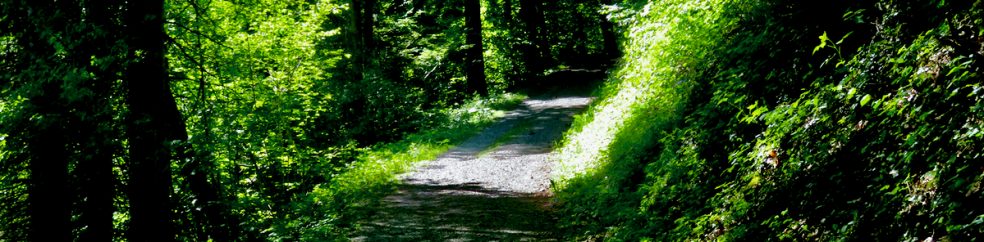
Can’t find my way home

…can't find my way home…

The various clouds appear, disappear, move and change at many different speeds simultaneously–and today they hid the giants of Jungfrau, Monch and Eiger–normally visible in this frame.

I am working on a story, The Orient Express, whose beginning and dénouement occur in the mountains surrounding Mürren in Switzerland.

This landscape inspires me because its very presence is mysterious–a consuming presence that forces me to interact with an elusive and overwhelming mystery…without beginning, without end…

Landscapes such as this are beyond my words.

Wet and Dry

Wet and dry can describe a lot of situations in life.

the joy of wet

Wet: These snow flakes can not wait to reveal their moisture–it flows.

efficient nourishment

Dry: These dates protect their moisture–they shelter it.

Lots of ways to understand wet landscapes from dry landscapes–the landscape of the humid temperate northern slopes of the Berner Oberland from the arid tropical sands of the Rub Al Khali.

Wet is not equally distributed on the Earth’s surface. Wet and dry have to be managed. Please permit me to offer a tenuously linked digression, just for fun.

In the big picture:

Wet: water, if you just measure surface coverage, makes up 70% of the Earth’s surface or 70% wet.  Ignores the underground water table wetness.

Dry: the land surface coverage makes up 30% of the Earth’s surface or 30% dry. Includes the land permanently covered by snow and or ice.

If we generously average the area covered by a standing human, averaging babies and adults, we can say each human covers 0.5 square meter. The number of humans in the world is 7 billion, therefore humans, standing shoulder to shoulder cover much, much less than 1% of the Earth’s surface.

Is there truly a shortage of water on the planet? Plentiful water or water paucity? I wonder…if someone, in the Berner Oberland flushes the toilet with less water, will more dates grow at the edge of the Empty Quarter?

Summary of numbers:

  • 510,000,000 square kilometers=total surface of Earth
  • 350,000,000 square kilometers=wet surface of Earth
  • 160,000,000 square kilometers=dry surface of Earth
  • 2,600 square kilometers=7 billion human shoulder to shoulder surface of Earth
  • 500,000 cubic kilometers=rainfall per year on surface of Earth, or 70,000 cubic meters per human per year.
  • Each human uses an average of 200 cubic meters water per year.

Shortage? Hardly seems like there should be a shortage of wetness does there?  Am I on the edge of an enigma here? Or is ‘water shortage’ just another nuanced imperialistic push by the globalizing Western world on others…they won’t find me…I am tucked away in an enigma.

!!!Ah–but the population growth projections! Ah–but the climate change projections! Ah–but the software programs that are without fault or human error or human political influence! Ah, yes, we are sure we can control climate and weather, right?

Another glass of water, please…I know a place where the tap water is really good!

An ancient saying comes from Bharat Varsha, known these days as India–‘austerity is the wealth of the brahmanas’.

That is an intriguing concept–a lack of material possessions as a source of wealth.  It does indeed respond as a balance to the obvious excesses of material acquisition, does it not?

Between Nejd and Nafud

Nejd Nafud

In the Nejd and Nafud deserts, it was these sand dune beauties that called…that seemed to be the emissaries of the Empty Quarter, the Rub Al Khali, the world’s largest contiguous sand desert, located in the southern Arabian Peninsula, to the south east of the Asir Mountains and north of Yemen and Oman.

In the 1980s, while living and working in the Kingdom of Saudi Arabia, I travelled the triangle from Jeddah to Riyadh to Medina, touching the edges of the Nejd and Nafud deserts, and then via the Red Sea coast back to Jeddah.  There were always somewhere in the landscape…sand dunes–not always continuous but amongst rocky plains and stony mountains, sand dunes tucked here and there.

Somehow these sand dune emissaries had moved north on their own from the Empty Quarter, and I must say–they began as magnetic attractions for my eyes.

But also their landscape stories, their landscape reputations became magnetic attractions through the ears as heard by St. John Philby, Bertram Thomas, Richard Francis Burton, Wilfred Thesiger, Gertrude Bell and T.E. Lawrence–all authors, all travelers, all mesmerized into their own Arabian Peninsula sand dune desert explorations.