


Locus iste–place holder is a place holder.

Locus iste–place holder is a place holder.

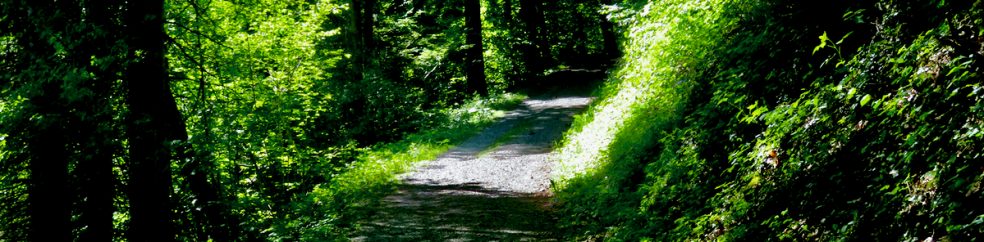
…just beyond the edge of the meadow, in the dark, thick and ancient forest, is the history of everything you never wanted to know.
But fear not. Just start walking.
…or too much time…
I’ve got too much time on my hands—it’s the only way I can explain this stretched metaphor where the skin on one’s face and plant cover on the earth are equated.
If plants are the skin, the face of the earth, then…

The sky, the earth, the clouds and water combine to give the most unique of deep and revitalizing facial treatments to the plants.

And afterwards…all are glowing…absolutely glorious…everyone is smiling!
Happy?
🙂

From a distance, it’s hard to see, but the waves carry it in the air…from that huge bowl of a valley…the pastures.

Closer, pastures rolling up and rolling across the slopes, the fields. My eyes and nose battle to receive their outpouring.

Invisible micro-whisps rising, swirling…they enter my nose, uninvited, confusing my sense of beauty with olfactory complexities; but then my receptors are overtaxed and I can receive no more—so I look and my eyes gradually suffer the same fate.
Why are these pleasures time-stamped? Am I being protected from following some forbidden sensual path into the home of these glorious plants?
Just a question. Because I will visit these pastures again tomorrow and for a brief moment share their waves of ecstasies.
The history of the Interlaken landscape before river channel control was one of a swamp as the Lutschine and Lombach emptied huge Alpine catchments into this flat land adjacent to the Aare River.
Up the valleys Grindelwald, Lauterbrunnen, Saxeten and Lombach where swampiness was not a problem, people have for centuries managed arable land to support their families. Particularly in the Grindelwald area, there are seven centuries of written records documenting how they managed the landscape.
So this region has a tradition of agriculture, crop and animal management in family scale over the lands from Alpine heights to valley floors. The following series of images show how the Interlaken neighborhoods now follow that same tradition of small land management and family food gardens today.

Most families dedicate a patch for seasonal vegetables close to their house.

Veg, flowers, and a place to sit outside.

This ‘front yard’ is 80% mixed garden, with little strip of grass–maybe for a pet.

A garden filled with healthy plants speaks of health and commitment to neighbors and passersby.

When the yard is large enough, there will be found a fruit tree. If even larger, a nut tree.

Each homeowner finds unique balance with the plantings of flowers, fruits, herbs and vegetables.

Municipal water supply for allotment gardens for people who have no gardening space at home.

In the allotments, beauty comes from sweat equity. Healthy allotment gardens are the best of public realm commitments–people and plants in harmony–heart warming it is.

Past the edge of town is a rural landscape with small scale patches of crops.

Small scale farming climbs up the slopes becoming pastures which are grazed and/or cut for animals.

Villages are densely built in the foreground. Pastures in the middle ground with barns for storing hay.

I just can’t stop including more images of healthy veg gardens next to homes–such a fulfilling feeling.

In this image is a public path on the right–and one heck of a healthy veg garden to the left. Tell me that is not a beautiful and inspiring landscape?!

Pasture in the foreground, veg in middle ground, flowers and home in the background. Nuf said.

Fruit trees and crops right up to the edge of town, then each home with its own veg and flower garden. It is not ideology, not theory. It is fact. It is the result of people understanding plants, gardens and landscapes through their own hard work and intelligence.

The yellow dots with black outlines are previously busy successful hotels that are empty, or rarely occupied, or struggling for a four or five-star rating
At the heart of a tremendous landscape. Interlaken.
In the Bernese Oberland region of the Swiss Alps, Interlaken is a 365day/year resort destination on the Aare River connecting two lakes at the confluence of four valleys.
Interlaken alone has more than 900,000 overnight stays/year. Tourism drives the economy. Landscape drives the tourism.
This place is all about design, why? Because this landscape exudes inspiration, it enables captivation. A guest can see it, breathe it, feel it, taste it and touch it. Landscape feeds design.
But change is inevitable. New design is required.

The last of the great Interlaken-Jungfrau five-star resort destinations from the Victorian era. Take the airs. Take the views. Take the walks. Take the cures.

This view of the Jungfrau from Interlaken across the Hohematte today has become nearly a touristic cliche. It was the original tourist attraction. Now it is only 10% of the landscape attractions accessible from Interlaken.
What is the inspirational magic that fills the air in this landscape? For two hundred years the greatest authors, composers and all humans have been captivated by this ethereal landscape beauty which has propelled them to design, compose, write, paint.
Great American writers have built on their experience in this landscape: Mark Twain, James Fenimore Cooper. And a partial list overwhelms: Haller, Rousseau, Goethe,(as inspired by the Staubbach in Lauterbrunnental), Byron, Mendelssohn, Schiller, AC. Doyle, Tolkien, Bierstadt, Caspar Wolf, Hodler, Calame, and pop ‘artists’ like James Bond, Clint Eastwood.
In the last century the Art Nouveau movement spurred deluxe hotel and town growth here.
The most practical and interconnected transportation and communication systems were overlain for easy access. Best in class convenience from the international airports of Zurich, Geneva and Bern via network of trains, trams and busses seamlessly linked to networks of bikes and pedestrians to all winter and summer recreation options including every xxx-treme sport. These put visiting humans into direct touch with the landscape.
Interwoven in all the above is the art of living in these inspirational landscapes. People who live here have translated their inspiration to trychler, yodeler, alphorn, sagen and scherrenschnitt.
Visitors gain access via Interlaken to sites having the UNESCO ‘international seal of approval’:
UNESCO Biosphere Entlebuch: An area of 400 square kilometres to demonstrate a balanced relationship between people and nature unfolds as a mystical world with pre-Alpine moorland and karst landscapes.
UNESCO World Heritage Jungfrau Aletsch: An overwhelming display of the Alps’ natural beauty covering over 800 square kilometres. At its heart lies the mighty rock massif of the Eiger, Mönch and Jungfrau and the glacial landscape around the Great Aletsch Glacier. The Aletsch Glacier is 23km long, the longest glacier in the Alps.
So what’s the problem? The hotel, resort destination cycle has been bottoming as the visitor profile has changed. Nobody has grasped what is the 21st century successful tourism paradigm. Four and five star hotels are out of business. Other hotels from the Art Noveau era can not easily meet the 21st century energy savings regulations. And the visitor who 30 years ago would visit one or two weeks, now visits two or three days.
Recent tourism numbers and trends intrigue.
Berner Oberland Region = 12,000 beds; net occupancy rate 50%
Interlaken Region = 4,000 beds; net occupancy rate 64%
International Arrivals = Europe 50%, Asia 25%, Americas 15%, Africa 5%, Middle East 5%
Interlaken Region Arrivals = Swiss 45%, International 55%
In conclusion, this Interlaken landscape region has undeniable attraction to Swiss and every geographical segment of international visitor. The annual visits are steady. The communication and transportation infrastructure is up to date and best in class; but the types of accommodations are not leading the way. The tradition of four and five star has all but disappeared–it struggles.
But there are committed private sector players whose future is based upon visitors’ feet on the landscape, regional transportation and watch consolidator. Both of them rely on successful, comfortable and convenient overnights.
Where does this landscape tourism go in the first half of the 21st century?
Airbnb, local holiday apartments, dormitory accomodations?
Are the traditional comforts of four and five star hospitality culture a memory, not suited to today’s green regulations, today’s pace of life, today’s constrained economics?
Or is there a new paradigm still undiscovered that matches and challenges this timeless inspirational landscape?
That is a question for designers, entrepreneurs and lovers of landscape.

For centuries, humans from this region have used the alphorn to express how this landscape inspires them.

Berner Oberland landscape and plants work their way into the finest corners of human inspiration, design and crafts.

Gentian blue, four species…but the color of lapis lazuli…implies the cultural wealth of millennia.

The local brewery, with 700 yrs of history, sells its brew in two litre refillables–collectible graphic design, no?

Lake steamers connect Interlaken to all towns and villages on the Thunersee and Brienzersee–fresh air carried on fresh water from the Grimsel Pass glaciers.

The arable land yields food for humans who respect that miracle in their crafts and architecture.

Whether by jodeling, alphorns or tales…human connections with the landscape are easily accessible in this region.

A visitor can access this landscape in every imaginable manner.

Human shelters for entertainment and education–the old and the new both sitting nicely in the landscape.

Departing Interlaken from the Hohematte foreground in the direction of the Jungfrau begins an exceptional landscape design sequence of spaces experience working up through the valleys to Grindelwald or Lauterbrunnen.

This is a view across the Hohematte toward the Jungfrau. The Hohematte is a 14 hectare meadow in the center of town, first owned by the Augustinian Monastery, then by Bern and finally in the 1860s bought by a consortium of locals who have preserved it as a meadow in perpetuity.

Interlaken blends modern with tradition in many aspects of design, arts and crafts.

Ethnobotany–only the bravest of the climbers could find edelweiss–Leontopodium alpinum.

Network interfaces–urban quality interfaces at the foot of Eiger and Jungfrau. Convenient and awe inspiring.

For walkers the wayfinding is superb. Networks to networks–superb. Clear, crisp.

In Interlaken, the Aare River connects the upstream Brienzersee to the Thunersee and continues as the largest tributary to the upper Rhine.

Churches tell the political and religious history–Catholic, Reformed–Austrians, French…via arts and crafts.

Art Nouveau craftsmanship inspired by the landscape.

…plants, animals, humans…
…shelter…and all are in the landscape.

It’s that time of year for snow–mid-November, northern hemisphere, in highlands ski country, though the weather is not quite ready to play.
…but we can fix that…fire up the snow machines!
…in the mountains…in one hour.

Autumn leaves are like forty years of a happy marriage.

The future is always unseen, uncertain, filled with anxiety.

Died and gone to heaven–all is clear.
These images revealed themselves over 15 minutes during an 800 meter climb on a cogwheel train in the Bernese Oberland Swiss Alps.

…Pop-Up City Center…
I slept well. I dreamt deep.
When I opened my eyes…it was hard to focus…near and far…both fuzzy. Then the foreground cleared and I could see in the distance…across the broad green pastures…I saw the city center.
It had developed over time, drawing resources and energy from the sun, the earth and water–all the while transforming those flows into new forms, new shelters.
The shelters were populated by all diversities of living entities with energy flows, day after day, night after night, until…until…like a Roman settlement in North Africa, they just no longer could sustain neither the energy flows, nor the diversities of living entities.
And the next day, the sun rose; and I was home before the sun set.