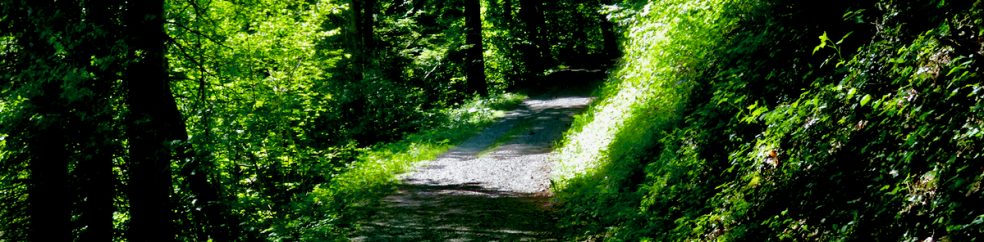
The summer’s dark green in the forest trees–only a few days of cooler weather and showers will bring…
Amanita muscaria–fly agaric
The iconic red and white mushroom, Amanita muscaria, found in all temperate climates under groves dominated by pines, birches or spruces, is most widely known as the fly agaric.
Easily identifiable by young and old, but confusing.
Poisonous, but edible if properly prepared.
Hallucinogenic–happiness and euphoria.
Myths, fairytales.
Delighting people from time immemorial.
Prominent in Alice in Wonderland, the Smurfs and Mario, the Italian plumber.
So…, what will it be for you?
Go out and find one first.
Under its cap even the little ones are safe.
Luckier than a four-leaf clover.
Band of Zwergs playing sweet music–have they eaten the mushroom?
Is this graphic calculation true? If so, then only about 4% of Canada’s boreal forest nullifies all of Canada’s carbon production.
I remember when I was in school, being taught that the carbon given off by people was taken in by plants that in return gave off oxygen for people. And that was a good, healthy thing.
The graphic above, if its calculations are accurate and true… then, on a world wide basis, I would conclude there is no carbon emergency on planet earth.
Part of what keeps me going into the landscape every day is how the people in the local towns and in their agriculture integrate at the smallest scale into the larger landscape. Wilderswil is an excellent example.
From my place I took two busses and in 10 minutes I was in Wilderswil Dorf–the center of the village.
The Bears Hotel in the center of Wilderswil–this is downtown in the village. 2,700 people live in Wilderswil which is part of the Interlaken agglomeration(24,000 pop.).
After 5 more minutes walk I was at the edge of the village on a pedestrian path known in the local dialect as a wanderweg–a way for wandering through the landscape–journeys to the unknown.
Wandering along a wanderweg.
After 15 minutes in thickmixed forest, a view of the larger landscape opened before me.
The small scale agriculture sits at the base of steep forested mountains.
The valley floor is pasture for smaller agricultural holdings. The forest begins where the slope becomes too steep for pasture.
The small scale agriculture comes right to the edge of town.
This is the kind of diversity that comes from hard work and returns healthy people.
The town people use every imaginable way to bring practical plants, gardens and small scale agriculture right to their doorstep.
These are typical throughout the village–the owners encourage nature right up to their front door.
This last black and white photo, taken in 1952, shows Wilderswil at the mouth of the Saxeten Valley and river. This valley, while never gaining the reputation of the Lauterbrunnen and Grindelwald Valleys, has undeniable drama and magnificent landscape setting. These are the Berner Oberland.
By Werner Friedli – This image is from the collection of the ETH-Bibliothek and has been published on Wikimedia Commons as part of a cooperation with Wikimedia CH. Corrections and additional information are welcome., CC BY-SA 4.0, https://commons.wikimedia.org/w/index.php?curid=59858775
That’s right. The ‘magic light’ that travels from the sun 93 million miles through ‘space’ and supplies an ‘energy’ to plants which in turn then support every living animal and human on this planet. Is that not amazing? Is that not magic? Or is that science?
Travels 93 million miles and still has enough power to feed this entire planet? And we think we can control that? Am I missing something?
Have you ever been where black forests white, only to feel winter pushing at the edge, unleashing colored dreams?
These are the forests of fairytales. Forests, where blacks and whites dissolve…into the always gray, always shady dreams…or do they?
Color or gray, dreams invariably have misty, shapeshifting edges where certainty and uncertainty jostle. And the fairytales? Were they once dreams, or…?