…clouds, mountains and forests…

…clouds, mountains and forests…

Here is a collection of images I have taken of plants and landscapes the past days as winter descends and the first frost arrives.
Winter descends. Previously we had snow only 2000 meters elevation and above. Last night, I fell asleep listening to the slow and peaceful pitter patter of rain falling softly on the roof. I woke up this morning to find the snow had snuck down to 700 meters elevation.
After this tree’s branches and trunk have built barns, built and heated homes, the remnants have become the nourishment for how many other living entities? Everything gets eaten in the end.
Frost bite, frost burn, yet there is some beauty in this image. Is there a lesson to be learned?
The frost is not the end but a tell that the end is near. In the background, the babbling brook runs away from that truth.
It happened last night.
Woke up this morning and winter had snuck in. Winter! And I had not yet even finished the requisite autumnal post.
Snow down to 3,000 meters. Above image shows in the foreground two valleys at 600 meters. The valleys drain the north side of the Jungfrau Massif, part of the Berner Oberland in the Swiss Alps. If you magnify, you can see Jungfrau, Monch and Eiger in the left center background.
Railing about what?
Once upon a time…and then it was yesterday…and you are reading this today.
In a land of mountain trains–funiculars, cable cars and narrow gauge cogwheel trains. They are slow and they get you high.
Why? Why get high?
I’ll let the following photos tell the story. You will be in the Bernese Highlands of the Jungfrau Region, the northern pre-mountains, above 2,000 meters in the Swiss Alps. Why build these mechanical contraptions to get high?
Here are the trains that get you high.
Passenger cars–note narrow gauge and cogwheel. Start at 600 meters, finish at 2,300 meters.
Passenger cars and engine–small and strong–electric power.
Engine close up–attached in front of the engine is a cart for transporting goods and construction materials.
Once you are high…the air is thin, fresh, cool and the distances…magical.
Mountains–Eiger, Monch, Junfrau with the Mannlichen gipfel amidst the clouds in the foreground.
Paths to explore, paths for discovering.
Discoveries.
Going deep in.
Can’t get enough.
Swiss Alps, Bernese Highlands, Jungfrau Region. North side of range.
What more can I say?
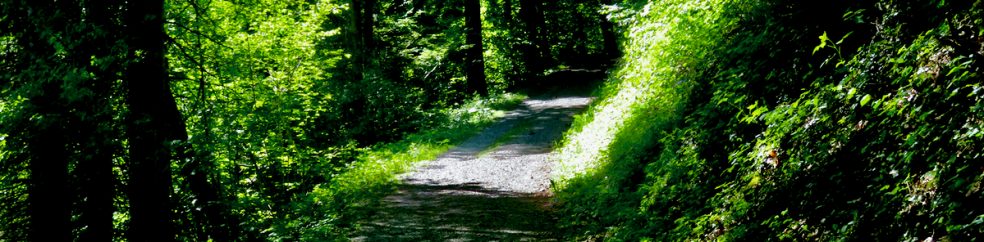
At 1400 meters above sea level, amongst the forests.
At 3000 meters above sea level, above the tree line.
Maybe two photos will help you on your way
On your way to where?
Worlds within worlds in the plant world,
Start here.
And try to get here.
But you can’t. You can only get there if you discover the path in real life. 🙂
…or, poppy?
…demanded I take this photo! 600pixels wide does not do justice to what my eyes and ears met that day.
What are landrace clouds? I made it up. Combination of words to describe the reality of cloud appearance in my neighborhood.
My neighborhood. According to the Swiss National Meteorological office, my Swiss neighborhood is the Northern Alps, the north facing slopes of the northernmost range of Alps in Switzerland. Using more common tourist and environmentally friendly vocabulary, my neighborhood is in the Jungfrau Region of the Berner Oberland around Interlaken. I live in the north-facing drainage basin of the famous Eiger, Monch and Jungfrau mountain triumvirate.
Now all that aside, over my years of walking this neighborhood, I have noticed that barely observable, minimal fluctuations in temperature, humidity, pressure and wind create quite dramatic formation and dissolution of very low level clouds. Please do not confuse them with fog. For a patient viewer, a dance reveals itself. And where there is dance, there is music. Not in astronomical time, but in real time. See it. Feel it. Hear it.
Unmistakeable to a person on foot.
So for me, landrace clouds are very specific, locally generated occurrences. That is my starting point. That is real. Then the fiction begins. I call it fiction because of the reality that what we call ‘fixed’ or ‘settled’ science is not really fixed or settled or permanent. I like working and writing on the edge of the fixed because every edge is fuzzy and invites exploration, as do these landrace cloud phenomena.
I ask myself, what really happens at the point where a cloud begins its formation in touch with the earth? My response is a bit alchemical, a bit old school. I theorise that point as the interaction of earth, air, water…kind of special already, no? But what about ether? What happens at the moment of generation and the final moment of dissolution?
So, I go hunting in my neighborhood for generation points of landrace clouds. Following are eleven images from recent forays.
1. Here is a generic shot of clouds in my neighborhood. Note the lake(water), the mountains(earth) and the sky(air). Note the cloud varieties. Anybody sense the presence of ethereal?
2. Here is a closer view showing certain cloud interactions with the earth.
3. In this partially zoomed view, note the implied dynamics of the landrace cloud edges.
4. In this zoomed view it is clear to see the scale of the landscape and the recently generated landrace cloud.
5. And now the landrace cloud hunt begins–first person–on the ground–in your face.
6. I learned the landrace cloud dynamics first hand. They always move. Their edges always change. The harder I looked, the further away they were.
7. On another day, I learned that if I just stood still long enough, the landrace clouds came to me. But on this day no such luck.
8. Without the opportunity to be at the point of cloud generation, I had so satisfy the walk by appreciating such details as here.
9. Spring wild flowers in Alp pastures never cease to amaze.
10. But as I was looking for the landrace cloud points of generation, I saw this hut at the edge of the forest.
11. And at the peak of the roof, protecting this hut, was…
All of the above represent a ‘typical’ walk in my neighborhood. And that is why fiction is just too close to fact.
18May2019: Crocus albiflorus growing on the edges of melting snow at 2,300 meters above sea level at the base of Mt. Eiger, Jungfrau Region, Berner Oberland, Swiss Alps.
Crocus–some might say it is carpeting this landscape.
I thought of it as a forest and imagined a walk through a Crocus Forest.:)
You don’t think so? Where is the singing if there are no flowers?
Right here! Can you hear the music? Spring is here.