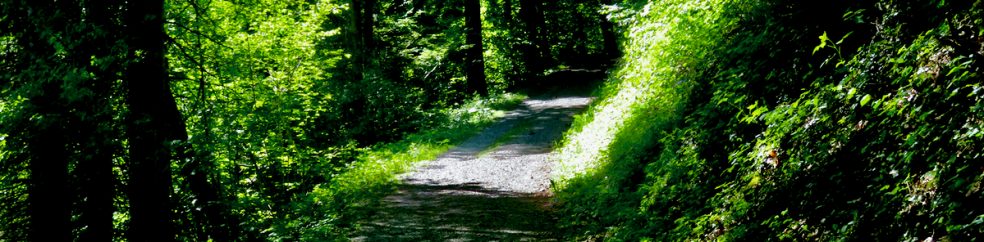
It may be a passion trying to find fertile ground, before it takes root. But then as it takes root, a strange transition occurs–passion into obsession–the roots go wild, they travel hard and fast and far…the obsession grows…and then what?
Berner Oberland: a humid, temperate, arable soil forest that I first experienced in real life in the 1960s, and it has been a landscape destination for me every decade since.
Rub al Khali: an arid, tropical, topsoil free, sand desert that I first experienced as, if you will permit me, a mesmerizing augmented reality in David Lean’s ‘Lawrence of Arabia’. That was also in the 1960s in the London West End. It became a landscape mystery I have explored every decade since.
Throughout my professional landscape architectural career, I have over and over, walked, drove, read, smelled, heard, felt–explored the above landscapes…they live inside me–they have taken root. They are growing.
From these distinctive landscapes has emerged a landscape obsession, an infatuation that can only be satiated by giving life to landscape stories, fictional stories that derive from personal experience, stories that endeavor to explain those landscape experiences which are…beyond words.
My first landscape story is The 23 Club, and it does unbundle those two landscape images above, revealing…(to be continued)
Wet and dry can describe a lot of situations in life.
Wet: These snow flakes can not wait to reveal their moisture–it flows.
Dry: These dates protect their moisture–they shelter it.
Lots of ways to understand wet landscapes from dry landscapes–the landscape of the humid temperate northern slopes of the Berner Oberland from the arid tropical sands of the Rub Al Khali.
Wet is not equally distributed on the Earth’s surface. Wet and dry have to be managed. Please permit me to offer a tenuously linked digression, just for fun.
In the big picture:
Wet: water, if you just measure surface coverage, makes up 70% of the Earth’s surface or 70% wet. Ignores the underground water table wetness.
Dry: the land surface coverage makes up 30% of the Earth’s surface or 30% dry. Includes the land permanently covered by snow and or ice.
If we generously average the area covered by a standing human, averaging babies and adults, we can say each human covers 0.5 square meter. The number of humans in the world is 7 billion, therefore humans, standing shoulder to shoulder cover much, much less than 1% of the Earth’s surface.
Is there truly a shortage of water on the planet? Plentiful water or water paucity? I wonder…if someone, in the Berner Oberland flushes the toilet with less water, will more dates grow at the edge of the Empty Quarter?
Summary of numbers:
510,000,000 square kilometers=total surface of Earth
350,000,000 square kilometers=wet surface of Earth
160,000,000 square kilometers=dry surface of Earth
2,600 square kilometers=7 billion human shoulder to shoulder surface of Earth
500,000 cubic kilometers=rainfall per year on surface of Earth, or 70,000 cubic meters per human per year.
Each human uses an average of 200 cubic meters water per year.
Shortage? Hardly seems like there should be a shortage of wetness does there? Am I on the edge of an enigma here? Or is ‘water shortage’ just another nuanced imperialistic push by the globalizing Western world on others…they won’t find me…I am tucked away in an enigma.
!!!Ah–but the population growth projections! Ah–but the climate change projections! Ah–but the software programs that are without fault or human error or human political influence! Ah, yes, we are sure we can control climate and weather, right?
Another glass of water, please…I know a place where the tap water is really good!
An ancient saying comes from Bharat Varsha, known these days as India–‘austerity is the wealth of the brahmanas’.
That is an intriguing concept–a lack of material possessions as a source of wealth. It does indeed respond as a balance to the obvious excesses of material acquisition, does it not?
Landscape, humans, animals…how do the humans fit in? Is there a preferred way for interaction between humans and animals in the landscape? In the Berner Oberland Jungfrau Region this photo shows an autumnal parade in the village, celebrating the return of the animals from the upper alps, the upper pastures, to their home barns.
The animals are celebrated, applauded and cheered by the villagers twice a year. In the early summer when they leave the village heading up to mountain pastures and then in the fall when they return.
The animals wear decorative headdresses made by humans from pasture and woodland wild flowers and leaves.
I wonder if the energy expended by humans and animals in the landscape, combined with human attitudes of service, duty and reverence, add together to help generate a healthy feeling in the landscape–despite the avalanches, despite the rock and landslides, despite the flash floods.
Today, after seven hundred years of humans managing forests, pastures, animals, villages and themselves, this Berner Oberland Jungfrau Region landscape attracts visitors from every corner of the world to have their breath taken away by the actual beauty and the aura this landscape brings to all.
For seven hundred years the local Berner Oberland farmers have organized, and agreed how to manage this mountain landscape, rich in water and soil, but limited in arable land.
The food chain of Berner Oberland sustainable agriculture has worked for nearly a millennium.
Now over the last century, the advent of tourism–itself is a mark of increasing affluence–has thrown a bunch of new challenges at these farmers. They continue to work through them.
But the landscape–look at it–it is cared for–the animals are cared for–it is beautiful and beautifully managed. This image depicts the essence of human stewardship of the landscape.
Monochromatic: the transition from fall into winter has brought fog to the mountainsides and lakesides. Only the foreground can be seen.
Fog in the literature of garden design and horticulture–I have always sought clarity in textbooks and popular writing from the fields of garden design and horticulture.
But unfortunately in both fields the more I read the more finely subdivided became the material of those fields–finer and finer until I became lost in a fog.
You may just write me off as another searching for the holy grail but…I have found lessons to be learned from the larger landscape that can inform those who try their hand at horticulture and garden design.
Fog is a monochromatic filter and winter is a gray scale reality. Both lessen the detail and the variety our eyes have to interpret.
So in my garden design, I need only water, healthy soil, light, minerals, deciduous plants and evergreens.
Or is that just the folly of a desktop gardener?
Gray Scale: lessens the detail that our eyes have to interpret.
W. Curt Mulligan, a Los Angeles Landscape Architect, executor and close professional friend of George Moleson, recently met the author at the above pictured Eau Zone pool deck restaurant in Dubai. Credit to Kerzner International Developer, EDSA Consultant and Desert Landscape Contractor.
Over the past year via some excellent beta reader reviews from Goodreads, I have updated my original Beta of Crystal Vision to Beta 02.
The 23 Club featured Erik Chalmers and occurred primarily in the Arabian Peninsula sand desert known as the Empty Quarter.
Crystal Vision is a pilgrimage, beginning near Medina in the Western Region of Saudi Arabia, that ultimately takes George Moleson and his design journals into the landscape heart of the Bernese Alps–Grindelwald, Switzerland.
George Moleson is a professional landscape architect from Los Angeles who had taken a job six years ago planning, designing, building, managing a new town on the Red Sea in Saudi Arabia.
When his best friend on the job commits suicide, George is shocked and is left with only one clue. His options become clear when his own job is terminated and he has nowhere to go. He begins a pilgrimage to the cities and hinterlands of Thailand and Switzerland in a hunt to find the fiancé of his recently deceased friend.
Along the way, George has doors of perception opened in Thailand’s Golden Triangle where he meets Vrndadevi, a permaculture specialist who talks to him about spiritual settling. Then she points him to the Swiss landscape where yodeling and the Bernese Alps encourage George into deeper personal and professional introspection.
These peculiar landscape events gradually refocus his original search to close the loop on his friend’s suicide onto his own professional and personal life uncertainties–a search to answer questions that we all face.
On the surface, this story is about design, plants, gardens and it takes place in exotic locations–a natural for me. But then it turns into something deeper.
Normally designers’ notes and their journals do not interest me–they are the overelaborated microscopic views of narcissists–the stuff of ethereal ephemera–but this one is different.
George’s design journals are like a well structured and well detailed beautiful garden, a series of garden rooms that had unfortunately been neglected, had become overgrown.
Look closely at them, pull out a few weeds, cut back overgrown others–the careful cleaning reveals beautiful plants with the spark of life, with kernels of good health. Inspirational portals of excellence await discovery, enjoyment, exploration.
Amanita muscaria pushing up from the forest floor.
On the northern hemisphere forest floors, this is the season to discover and examine mushrooms and toadstools.
Mushrooms are edible fungal growths taking the form of domed cap on a stalk, while toadstools are similar but traditionally poisonous. This world of the forest floor is a dangerous place for casual and naive human visitors. Beware.
Amanita muscaria from underneath…now where is that dwarf?
With its bright red, white-spotted cap the fly agaric (Amanita muscaria) has delighted people since time immemorial. It is inedible (with a psychoactive asterisk, a risk) and yet considered one of the most attractive and most familiar species of fungi–a subject of many myths and fairy tales–valued also as a good luck charm.
Its white-spotted, red cap covers the head of a dwarf who carries out all sorts of mysterious activities in the forest.
Correct me if I am wrong but anyone who has silently walked through a rich, multi-layered forest knows that there are movements that strangely occur…movements on the edge or just beyond the capacity of our senses. Algernon Blackwood’s short stories examine those areas.
I’ll say no more. But I would appreciate the comments from readers who themselves have experienced, in the forest, that which cannot be explained.