


As the evening comes and the snowy blanket gently covers the town about me, it is time for me to cuddle down, get warm and have a peaceful night’s sleep. It has been a very long week.

As the evening comes and the snowy blanket gently covers the town about me, it is time for me to cuddle down, get warm and have a peaceful night’s sleep. It has been a very long week.

The tree of freedom needs refreshing. We all do.
I have always stayed away from the politics of my home country, the United States of America. A place that grew me and educated me. I am proud of my past.
These days I find my freedom walking the landscapes of my previous posts. It is my physical and emotional thought balm.
The USA, for all its faults, has been a beacon of freedom and hope for people world wide.
No longer.
After this past 2020 presidential election, everything has finally been turned upside down. Conclusively. Those professing freedom are totalitarian fascists closing down free speech and free discussion of thoughts. I can’t believe it. There are tears and tears in my heart.
Following is a thick paragraph I read from an anonymous poster. It summarizes the unbearable conditions in the USA on 8Jan2021.
“For those who don’t get it! Now you understand why there was never any action against the Clintons or Obama, how they destroyed emails and evidence and phones and servers, how they spied and wiretapped, how they lied to FISA, had conversations on the tarmac, sent emails to cover their rears after key meetings, how Comey and Brennan and Clapper never were brought to any justice, how the FBI and CIA lied, how the Steele Dossier was passed along, how phones got factory reset, how leak after leak to an accomplice media went unchecked, why George Soros is always in the shadows, why Romney and Paul and Bush and McCain were all involved, why they screamed Russia and pushed a sham impeachment, why no one ever goes to jail, why no one is ever charged, why nothing ever happens. Why there was no wrongdoing in the FISA warrants, why the Durham report was delayed. Why Hunter will walk scot free. Why the FBI sat on the laptop. Why the Biden’s connection to China was overlooked as was unleashed the perfect weapon, a virus that could be weaponized politically to bring down the greatest ever economy and usher in unverifiable mail in voting. Why the media is 24/7 propaganda and lies, why up is down and down is up, right is wrong and wrong is right. Why social media silences the First Amendment and speaks over the President of the United States. This has been the plan by the Deep State all along. They didn’t expect Trump to win in 2016. He messed up their plans. Delayed it a little. They weren’t about to let it happen again. Covid was weaponized, Governors helped shut down their states, the media helped shame and kill the economy, and the super lucky unverifiable mail in ballots were just the trick to make sure the career politician allegedly with hands in Chinese payrolls that couldn’t finish a sentence or collect a crowd, miraculously became the most popular vote recipient of all time. You have just witnessed a coup, the overthrow of the US free election system, the end of our constitutional republic, and the merge of capitalism into the slide toward socialism. What will happen next? Expect the borders to open up. Increased immigration. Expect agencies like CBP and INS and Homeland Security to be muzzled or even deleted. Law enforcement will see continued defunding. The electoral college will be gone. History erased. Two Supreme Court Justices might be removed. The Supreme Court will be packed. Your 2nd Amendment will be attacked. If you have a manufacturing job or oil industry job, get ready. If you run a business, brace for impact. Maybe you’ll be on the hook for slavery reparations, or have your suburbs turned into Section 8 housing. Your taxes are gonna go up, and businesses will pay more. I could go on and on. There is no real recovery from this. The elections from here on will be decided by New York City, Chicago, and California. The Republic will be dead. Mob rule and appeasement will run rampant. The candidate who offers the most from the Treasury will get the most votes. But the votes voted won’t matter, just the ones received and counted. That precedent has been set. “Benjamin Franklin was walking out of Independence Hall after the Constitutional Convention in 1787, when someone shouted out, ‘Doctor, what have we got? A republic or a monarchy?’” Franklin responded, “A republic, if you can keep it.” Ladies and gentlemen, you will now lose your Republic. You turned from God. You turned from family. You turned from country. You embraced degeneracy culture. You celebrated and looked to fools. You worshipped yourselves selfishly as you took for granted what men died to give you. You disregarded history and all it teaches. On your watch, America just died a little. It’s likely she’ll never be the same again. Some of you have no idea what you’ve done. Sadly, some of you did.“
Thick paragraphs are hard to read. This one above is the hardest.
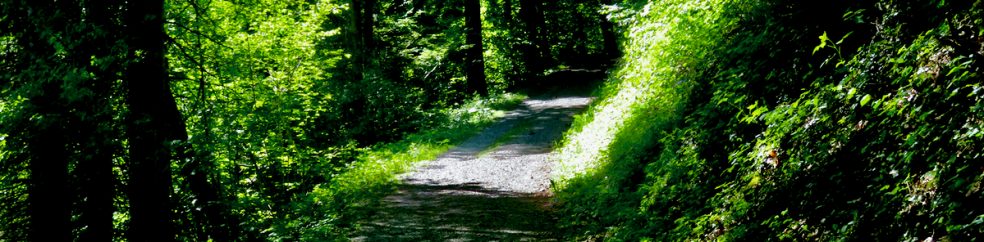
I am going out for a walk.
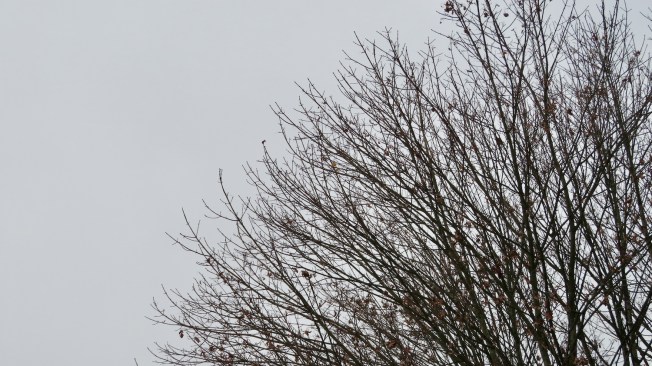
Reaching for hope
I couldn’t figure it out.

Forests, mountains and sky–somebody was doing some huffing and puffing.
In my last post, I referred to winter towns squeezed between the mountains and the lake at the shore line. Upon closer examination, they are not squeezed–they just fit. Like we’d all like to fit…and not be squeezed, not be forced.

I think, winter spring, summer or fall, I would have fun walking this village, don’t you agree?
Late December 2020 in the northern range of the Swiss Alps.
I crossed the line.
What? Which line?
Did I stop wearing a mask?
Did I stop supporting local populism?
Did I walk the wrong way on a one-way-street?
No.
I stopped seeing winter as cold, naked and heartless. I stopped seeing winter as death to be abhorred.

No leaves? No problem. No sun? No problem. Huge landscape? Big time. Mountains, sky, lake. Along the shoreline in the middle ground and background, the big landscape squeezes three towns into mere nothingness. And, by God, I saw beauty. I had crossed the line.
Clouds gently drift into and pause in places we humans can not easily access.

I’d rather have my head in the clouds than my face in the mask.
What is freedom? What is science? What is clear? What is certain?
I have talked about, that is, written about portals…portals and plants.
What do I mean when I say portals? It is more about what words can not describe. What?
Perhaps you remember some TV shows, Twilight Zone, One Step Beyond…but this is about real life. That’s right, real life.
For centuries, dare I say, millennia, people, humans have spoken about, written and explored the indescribable relationships between plants and humans. Portals is my effort to continue that chain of communication.

This last week I had a birthday. I received from my dearest friend two books of illustrations by the Swiss, Ernst Kreidolf. Both images in this post are his work. He spent his lifetime addressing the communication relationship between people and plants.
Ernst used gnomes and elves to describe these indescribable relationships.
Let me share some of Ernst Kreidolf’s life story.
He was born over one hundred years ago in Switzerland. He was a classic artist, a pioneer of children’s illustration and picture books…and gnomes in the popular imagination! His magical illustrations have a timeless quality. To this day, his art is still very popular in Switzerland.
Ernst Kreidolf und die Pflanzen
Kreidolf’s famous books first appeared in 1901 Die schlafenden Bäume (The Sleeping Trees), in 1902 Die Wiesenzwerge (The Meadow Dwarves), and in 1903 Schwaetzchen fuer Kinder (Chit Chat for Children). In 1904 Kreidolf was involved in Richard Dehmel’s Buntscheck, ein Sammelbuch für Kinder (Patchwork, a Scrap-book for Children). In 1905 the book Alte Kinderreime (Old Nursery Rhymes) appeared followed by in 1908 Sommervoegel (Butterflies). The latter was highly acclaimed by Hermann Hesse. In 1911 Der Gartentraum (The Garden Dream) was published.
In 1920 Blumen Ritornelle (Flower Chorus), in 1922 Alpenblumenmaerchen (Alpine Flower Fairy-tales), in 1924 Ein Wintermaerchen (A Winter’s Fairy-tale), in 1926 Lenzgesind (Servants of the Spring), in 1928 Das Hundefest (The Dogs’ Party), in 1929 Bei den Gnomen und Elfen (With the Gnomes and Elves), in 1931 Grashupfer (The Grasshopper), in 1932 Aus versunk´nen Gärten (From the Sunken Gardens) and in 1935 Die Himmelreich-Wiese (The Kingdom of Heaven Meadow).
His illustrations carry us off to the world of fairytales and dreams, where plants play a leading role.

One cannot but wonder at his ability in both identifying the key characteristics of plants and giving humans a unique interaction with them.
His legacy endures as a tender ode to Mother Nature’s glory. The best illustrated web site with Kreidolf biography–a fantastic display of his water-color work.
And portals? His work was all about portals.
I think I can see the future.

Or, have I confused the forest with the trees?
Or, the trees with the forest?
Are we there yet? Have we made it through the clouds, through the forest?
…virgin? Take your pick.
This landscape has been labelled, the Jungfrau Region. The Jungfrau is the virgin. I see it differently. These are the Three Kings.
Mountain peaks from left to right, Eiger, Monch and Jungfrau.

Snow = Water. Water = King.
But what I like most about this photo is the foreground. On the top of the center foreground hill, see below, is a place to have a cup of coffee and a piece of pie while enjoying unrestricted visual access to the Kings.

Look carefully in the right center background to see the Jungfraujoch Observatory at 3,400 meters above sea level.
What happened to my beautiful autumn?
Today was one of those fall days when I just had to take a walk.
No mask. No distancing. Just a walk outdoors.
The fresh air keeps me from thinking why so many governments and media outlets want me to be afraid to breathe. Afraid to breathe? Yeah, because somebody might die. I have to be afraid of breathing? Doesn’t make sense.
So I took a walk. On a mountain path suitable for this 75yr old, three years after a stroke, nevertheless, in good health.
Clouds were everywhere. And they weren’t everywhere as I walked uphill.
I breathed deeply the air. The air was influenced by agriculture and forestry management. It was not influenced by bustling cities. When I inhaled deeply. The air felt clean and healthy deep down in my lungs. The entire passage felt clean and healthy.
To me that is not only the basis of life, it is the simplest pleasure of life. I was feeing refreshed, what to speak of fall color and 50 degrees Fahrenheit
Then I was in the clouds. I found myself walking in the sound of clouds. In case you haven’t, you should note that clouds come and go without sound. Without even the slightest whisper they come, they envelope, then they leave. Through the entire experience, the thread of sameness was silence.
But other things changed. As I walked deeper into the cloud, I saw less and less about me. My breathing became labored. Then my mind took over–had I been enveloped by a covid cloud? Hard to breathe–is this my end–is this the beginning of harder and harder breathing–never getting enough?
Then the cloud lifted. Clarity resumed. Unhindered deep breathing resumed. I was no longer afraid to breathe.

1. In real life these mountain clouds form, dissolve, move at speeds that disable human powers of observation. They are as slow as they are silent.

2. They arise, grow and dissolve while we are busy thinking. Stealth is their very essence.

3. In these mountains, it is easy to walk above the clouds–not fog–clouds!

4. Autumn colors seduce.

5. Clouds arrive without warning.

6. They thicken without warning.

7. Breathing becomes labored.

8. …and then under labored breathing, the mind troubles. The mind can become our worst enemy. Only proper use of intelligence can harness the mind.

9. Clouds lifting, like intelligence cleaning out the worries of the mind.

10. Clarity returns; but clouds are always just around the corner.
And speaking of stealth, I think my freedom to breathe healthy air deep into my lungs, under some debatable guise, may be in real life, stealthily taken from me.


