I don’t go out looking for trees–but when I’m out sometimes they call me.
This year the Tilia trees’ blossoms came earlier than normal. It was my olfactory pleasure. I could not say no. The fragrance captured me. It made me smile.
An online search of Tilia spp., their floral fragrance and their teas can keep you busy a whole day. Bottom line? Tilia fragrance and perfumes, Tilia fragrance and teas…a deep and mystical appreciation by all involved. No one can describe with absolute certainty what is the amazing fragrance. So, I’ll tell a personal story.
There is a time after the glorious spring greens that a summer tedium green takes over all deciduous trees. Tedium green? That’s the summer green that makes all deciduous trees look the same. They all fade into a dark green, amorphic background.
This morning it began. Mature foliage on all deciduous trees had grown full size and darkened. It was working–each leaf a mini-plant-factory taking in the glorious sunshine and the CO2 to assure their health and ours.
Here is what I found in town. Unannounced, the nearest Tilia tree–its fragrance descended upon me. The tree was already a physical landmark. I realized it was also a sociological landmark, a local center for relaxation–soothing away anxieties. Its fragrance does that.
In other parts of town, people were climbing into the lower Tilia branches where they collected flowers. They took them home for drying to produce homemade herb tea known for its calming pleasure.
Look for your closest Tilia or lime or linden.
Under the linden, the local landmark where everyone gathers to relax and enjoy the linden flower fragrance.Summer sunrise on the landmark flowering linden.Alone, the size of the linden identifies it as a local landmark in town.
***
When CJ went to study local landmarks in the Moroccan towns (medinas), he learned things about landscapes and gardens they didn’t teach at university. Check out Tangier Gardens for a good read.
As it has for millennia…the fragrant rose…exudes a mellow sweetness that quietly and slowly penetrates the deepest corners of the heart and surreptitiously intoxicates…soothes all emotions.
…the fragrant rose…
Get close to a fragrant rose today. It is a free pleasure. Let that fragrance enter your being.
When CJ was in Morocco, it was not scent so much as the sights and sounds of the plants that entered his being and took him to places never talked about at university.
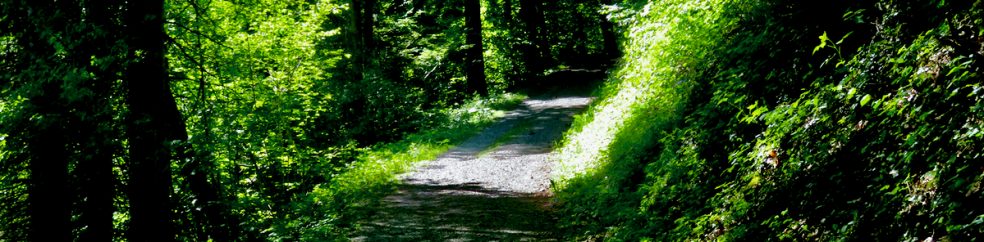
At 2,000 meters above sea level, in the northern range of the Swiss Alps, I rediscovered the spring joy I had experienced three weeks ago, albeit at 500 meters above sea level. The glory of walking mountainous landscapes.
This joy can be discovered anytime, anywhere.
This is a similar joy to that Christopher Janus experiences in the Mediterranean gardens and landscape of Tangier, Morocco. For CJ it was both muse and adversary.
In my novel, Tangier Gardens, CJ completed his term abroad design study by assembling a series of short stories documenting his unusual Moroccan landscape interactions. This is one of his stories. This is not a fantasy. It was CJ’s real life in Tangier.
Wikipedia describes Aicha Qandicha as a female mythological figure in northern Moroccan folklore.
But this wasn’t exactly describing CJ’s experience. Here’s how he told it.
Part One: We all have one
After I had the cast put on my ankle, I was immobile. My design study had gotten lost in the fog. I was desperate. I needed help. That’s when the Goblet stories began their reveal.
I learned some very unexpected things about myself in Tangier. The most intriguing occurred in October when I engaged in a disciplined chocolate and absinthe meditational cleansing. The cleansing was gentle. It revealed itself through subtle changes, internal realizations.
One morning before sunrise, I had finished the chocolate and absinthe treatment and was sitting quietly in my rooftop terrace garden when I found myself engaged in the strangest bit of internal conversation. A voice spoke to me. That voice spoke from a strange part of my head, near the inner ear or thereabouts.
It said, “Hello, my name is Goblet. I am your chalice keeper. I can help you.”
I needed help.
That was the beginning of a friendship—a kind of crystal ball friendship. I don’t know how else to describe my relationship with Goblet—sometimes there, sometimes not there. I could never be sure. But it was all built around my sense of hearing. Goblet explained the background.
Goblet told me, “There was a time when there was no such thing as white noise. Hearing always has had many configurable adjustment bands that could consciously, subconsciously, voluntarily, or involuntarily filter for hearing improvement. Then, as time passed, as environments morphed adjustment mechanisms failed. White noise and all iterative variations made hearing via air outright painful.”
Goblet continued, “For certain important messages, in order to hear them without extreme and torturous pain, it became necessary to go underwater to hear. Then finally today, resulting from the hard filters, we have so many sounds that are not understandable. It is for our safety that our ears now have a hard fixed filter that limits the sound waves we can hear. The ears’ capacity is only 15% of its total capability.”
Goblet’s historical perspective intrigued me.
Goblet added more, “That hard filter is not the only ear filter. Each of us also has a secondary filter, an intelligent, discretionary filter that is known generically as a chalice keeper. A chalice keeper is an angel—a personality with a duty to protect and to clarify that which appears unknowable in life. Chalice keepers are sexless. They pass on knowledge untainted by human vices.”
Goblet paused, weighing my comprehension, then continued, “You may wonder what is the chalice? It is the low-level network of control that regulates passage and transformations via the sensitive, multi-dimensional connection gates, the ports, the portals between sound waves, the hardware of the ear itself and the neuron transfer of sound via the nervous system in the brain. That control also includes the essential connections to the pineal glad and to the seat of intelligence in the heart itself.”
Back in the US, my world normally was a din. But while in Tangier that din expanded into a multi-layer aggressive—a confusing labyrinth.
While I was asleep, Goblet moved quickly and directly to solve what was troubling me. Goblet always found the way. Goblet found the intended destination by keen hearing.
Every time I went to sleep, Goblet could detach himself from me. Goblet could travel to the places it could never travel with me because in hours of consciousness I functioned as a restraint, as Goblet’s governor. My world fit into the constraints of time and space, while Goblet was free of those constraints. I walk through the world in 85% ignorance of what is around me. Goblet witnesses everything and is there in particular to assist me, should I choose to listen in times of stress and danger.
Chalice keepers are why most of us have magic in our ears. Goblet is why there was magic in my ears. Our ears bring us magic. They suspend time; they suspend place. They control the ports, the portals of connection to all worlds, real or imagined. For me, Goblet was active and motivated because, as a designer, I was an explorer. Chalice keepers are especially keen to help explorers. Goblet helped me. Goblet was my pass to the .
Here is how I came to understand it. Human’s gross sense organs are all severely filtered. The sense organs are limited so that the confusion of continuously multiple inputs does not overwhelm the need to act. If the human sense organs are overwhelmed, the human may become paralyzed—a sort of analysis paralysis where too many new inputs are occurring too frequently to allow for intelligent discrimination.
Goblet filters these inputs for me. Goblet hears everything as it is. Then when I am under stress, uncertain, anxious, Goblet feeds, via sounds direct to the ear, or dreams, or thoughts or ideas, the data to facilitate my discriminating and decision making. Goblet does not decide. In essence, Goblet is like a data base. Goblet filters, then feeds data to me. Then I assess those data and, via free will, decide on my own course.
Goblet is not all knowing. Goblet goes out to gather information. When I am sleeping, Goblet does this. Goblet has limits to travel. Goblet must find and arrange material conveyances while problem solving for me. For transportation, Goblet communicates most regularly with dragonflies and storks. In the scheme of things, they have a duty to facilitate the required travel of chalice-keepers. They and the chalice keepers share knowledge and information without the constraints of time or space or language as we know it.
I was obviously under duress. My attempts to come to grips with the culture of Morocco, the street scene of Tangier, while simultaneously trying to reconfigure my design study caused me ceaseless stress. My goal had not changed. I still wanted to graduate and get on with my life in the professional world of landscape architecture. But my filters were clogged. Noise had weakened me. I had become a rebel without a clue.
Goblet definitely had work to do.
Part Two: In the bled Magrebi
Sometimes all needed was Goblet helping recall what I had slept through in history or geography classes—or books or stories that I had read.
Stork, known locally among his friends as Cico, pronounced seeco, knew he was on call; but he was comfortable sleeping in his nest on the top of an old column in Tangier’s La Montagne neighbourhood. He was on his winter vacation. He liked Morocco, quiet, drowsy kind of place—mild winters—early springs.
Cico was in a languorous daze. Pleasant, he was… then he heard his name being called… he thought, “It’s one of those chalice keepers… they are generally nice… but they have a knack of interrupting my sleep.”
Goblet was eager to get advantage of a large stork—traveling with a stork was almost like traveling first class on a commercial airline—large seats, lots of room, but better. Always a smooth flight; and thus easy to absorb information.
Cico responded, “Hello, who’s this and what’s this—a ride where?”
“My name is Goblet; and with your help I need to get out and into the countryside.”
“Countryside? I can get you there. Hop on. The countryside is pleasant at night.”
Goblet liked Cico’s helpful attitude and asked, “What’s it like here? Do you find it difficult? I was with Aeshna, the dragonfly recently, and we had a horrible intrusion by young humans.”
“No, it’s not bad down here—it’s like a winter vacation. But you can’t ever be sure about human youth. Most chalice keepers down here stay home. Most all the humans are content with their mosques and their mountains—but up north in Europe it’s different. Always dissatisfied, those Europeans—always seeking discoveries, answers. So it is hard work up there. Truth is most of the storks head south.”
Goblet preferred the storks—nice smooth rides—and soft smooth personalities. Not like the dragonflies—but oh, those dragonflies were colourful, beautiful, and riding them was exciting, fast…
“What are you looking for?”
“My master needs to get the aura of the countryside and its importance to humans here.”
“I can help; but first, can you tell me something about humans?”
“Sure, what is it?”
“Why is it that humans have such a hard time understanding the good and the bad at the same time? Why do they think that death is bad? Why do they not understand that life begets food for other life and that death is inevitable? I thought you chalice keepers were to help them with these big picture items?”
Goblet, noting the old tendency among storks toward verbosity, had to push gently to get a word in edge-wise. “Humans have this thing called hope and they must nourish it otherwise they have a tendency toward self destruction. Especially when lots of them congregate, they make swirling, massive interventions on the landscape.”
“Ok, we will sort out your master. Everyone counts—one by one. In the countryside, we should visit marabouts. They are filled with human historic endeavour to discover something better in this region.”
“Marabouts—in the countryside—tell me more.”
“The marabouts in the countryside, anywhere, can shelter both good and bad djinns—or either one, or the other… you never knew if no one told you or you had never visited—and over time they change. The bad ones mislead like a rascally boy, just happy to make a fool out of you. The good ones can part the cacophonic curtain of life, granting a visitor temporary peace or provide useful direction for the visitor’s life. Sometimes the same djinn can do either, depending on the attitude, the aura of the visitor.”
“Here’s one. This marabout has a mix of Christian, Moslem and Animist roots. Even so, Christians are not allowed, though some sneak in when no one is watching. This saint bestows barak, good luck on visitors who leave their fluss, their money, and promise to become in this world servants, instead of takers.”
Goblet looked about—looked ok on the inside—Goblet had brought my thoughts and set them on a ledge inside. Goblet and Cico sat still without talking—just listening, just feeling. Then Goblet felt a chill. Both simultaneously noted the creek just outside and downhill from the Marabout window.
Cico said, “There are all different djinns—friendly djinns, nice but dim djinns, confusing djinns, threatening djinns, and djinns ready to cause bodily harm—but a creek next to this Marabout…”
Goblet and Cico looked at each other–they both knew what that meant. Aicha Qandicha— powerful djinn in this part of Africa.
Cico said, “She is always about the sources of water–she can smell the men who are strong, who are saving themselves, who know restraint, austerity…”
Aicha Qandicha could smell that masculine strength from the thoughts, my thoughts which Goblet had set down at the Marabout.
Cico continued, “She attaches herself to strong men. She craves the challenge of undermining them. She knows how to distract men with her beauty and then confuse them.”
Goblet snatched up tightly my thoughts and motioned to Cico. They sped as quickly as they could, away from the creek, up high in the air, away from the humidity that marked the area of the Marabout and the creek, hoping to disconnect from any trail my thoughts may have left behind.
Goblet hoped that Aicha Qandicha would not follow my thoughts back to Tangier. Goblet knew that the last thing I, already redlining with uncertainty—the last thing I needed were attentions from Aicha Qandicha.
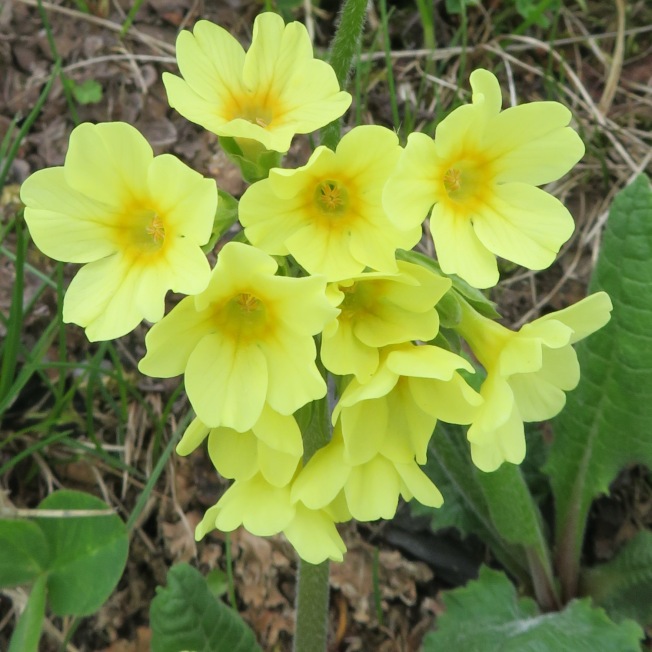
New fresh spring green blades of grass and then common primroses. We are past the beginning of spring into the warm Easter colors of spring.
Let me see–how many years have I been alive?
Has there ever been a year without a glorious spring?
Of course not.
Spring inspires me to write about that existential wonder we all share. Spring is medicine that soothes the political and media attempts to agitate us all.
I just go outside and take a walk.
The best of my spring inspirations has been my first book, Tangier Gardens.
In Tangier Gardens, I explore the curative effects that plants provide to ease human existential anxieties.
Every spring is a joy! So let’s cheer the warmer sunny days, fresh spring greens, dancing flowers, sweet scents–everyone of those entrancing joys.
Celebrate the first day of spring with an additional joyful special–a FREE OFFER.
For five days only around the first day of spring, I offer for FREE my debut eBook novel, Tangier Gardens. On the mesmerizing Mediterranean coast, the story revels in the discoveries of Med landscapes, gardens and plants.
aficionados of landscape architecture, the Med and Morocco.
~~~~~~~~~~~~~~~~~~~~~~~
In this bildungsroman, Christopher Janus, his friends call him CJ, needs a break. He has been busting his hump full time six years at university with one more class till graduation.
CJ’s studying landscape architecture, into pedestrian towns and warm sandy beaches. For his last class, a term abroad design study, he’s on his way to Tangier, a town coincidently with sandy beaches on the Med and a historical pedestrian district, the medina.
In Tangier Gardens, the author draws upon his years of extensive experiences in the Middle East and North Africa to weave a fascinating tale of intrigue.
Just released, this fast moving novel is on a ‘Spring Joy Special’, the eBook is regularly $3.99 but to celebrate the coming of spring 19-23 March, I offer it for FREE.
What about the Berbers? Where did they come from? And how many Berber differences between the Mediterranean and the Sahara?
CJ was looking in the landscape for cultural roots.
Morocco–where cultures of the Berbers, Africa, Arabia and Europe collide.
Where do cultures originate? As CJ, Christopher Janus, encountered the diverse variety of north west Africa cultures woven through Morocco, he was mystified. He was uncertain. He lost all clarity.
What had seemed to CJ to be a simple check-the-box term-abroad design study in Morocco became dark and darker. CJ did not know where to turn. The labyrinthine medinas became his metaphoric state of mind.
A fog of failure overwhelmed him. His life was in danger. His project was down the tubes. And his graduation was in question. CJ’s dreams of the future had gone down in flames.
Then he discovered portals–plant portals. What are plant portals?
Let CJ describe them in his fictional autobiography, Tangier Gardens, set at the outset of the 21st century. His is the story of fascination and intrigue. It asks more questions than it answers. Get into it. CJ did.
In a limited time Spring Joy offer on Amazon, 19, 20, 21, 22, and 23 March 2022, the Tangier Gardens eBook, normally $3.99 is FREE. Buy it on the first day of spring! Grab Spring Joy while you can.
If you would like to be kept up to date about discounts on CJ’s portal adventures in the Middle East and North Africa as he becomes an expatriate landscape architect, sign up here on CJ’s mailing list.
Looking for something? First job? New job? The last time I was looking for a job…
Looking for something? Need to put food on the table?
I had an open field. I had a level playing field. But…no job.
No result. In the distance I saw a forest—a well-known forest, everyone knows it, it’s the forest known as the ‘can’t tell the forest from the trees’ forest. I’d been there many times. But I needed a job, so I walked toward it.
That’s when something strange happened. I was pushing my way through a shrub thicket between the field and the forest when I heard… it wasn’t a voice; it wasn’t music… but something in between. I paused and examined the surrounding shrubs. One caught my attention.
Did I hear something?
It was still winter, but this shrub had flowers. I had heard of it before in my horticulture classes. In Latin I learned its name—Hamamelis virginiana. But it’s common name intrigued—witch hazel. I looked deeply into the bright yellow spindly flowers. Woody citric scent that had a floating sweetness with rusty tinges. The strange sweetness pulled me closer to one flower—as I examined—I heard what I should do to get my job; but I didn’t know it yet.
Flower fragrances—can they hypnotize? That’s how I felt as I walked home. I went online to do some research. Hamamelis sp. — a lot of them—virginiana, vernalis, intermedia and a slew of hybrids in the US. And the common name—witch hazel. Witch hazel? I did more research and learned that this plant had a long history of medicinal uses—the leaves, the stems, the seeds, the bark—the list of uses was too long to follow.
Botany–the ethnobotanical threshold.
That was before I saw a cross reference, a link to… I never thought about it—Druidry! The native Americans and the European Celtics—the druids—had another range of uses. Uses that never were covered in my university horticulture studies.
Before I knew it, I was deep into reading about the Hamamelis sacred tree profile and its magic, medicine, and mythology. Deep. I was in deep! Liniments, poultices, teas… and other uses smoking, dowsing, water witching and way-finding.
Way-finding caught my attention because I was looking for a way to find my next job. Was I on some kind of BS coincidence or was I really on the threshold of a new path—a new journey?
That is what I was thinking while I read more. ‘Witch hazel brings light and hope into dark places and dark times. Witch hazels help find things.’ My research told me that this shrub is important to work with if I am on a journey, seeking a new path, or trying to find my way through uncertain times.
‘Work with’ a plant? What the hell does that mean? Should I even take that seriously?
I went back outside and walked once again through the thicket of witch hazel on the edge of the forest. Without trying, I found myself next to the Hamamelis flower that, if I was to use my new language, the flower that tried to work with me.
What did I sense… something touching my heart? Time for a new path, a new job.
Writing—writing? There is a lot of time and space and energy between landscape architecture and druidry, yet both work daily with plants. As I mulled through the differences, as I examined the gulf, I saw they well equipped me to write about it.
Then I wrote Tangier Gardens. I set up CJ as a traditional landscape architecture university student who had a fondness for plants. But when he went to Tangier for his term abroad design study, he encountered experiences in the north west African landscape that caused him to re-evaluate what was the essence of landscape architecture.
CJ had to re-think the relations between human culture and the landscape. He had to rethink the existential realities that linked humans and plants.
Was CJ a landscape architect or a druid? That is for readers to decide as they follow CJ’s Tangier experience. Learn more about Tangier Gardens and CJ on my Amazon book page.